About Rotheca myricoides (Hochst.) Steane & Mabb.
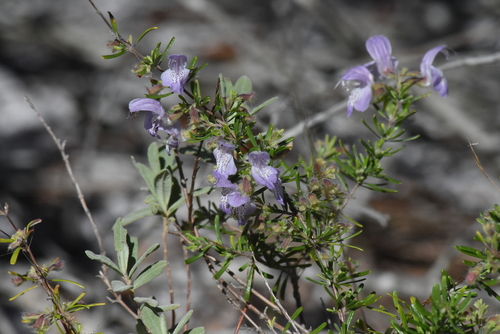
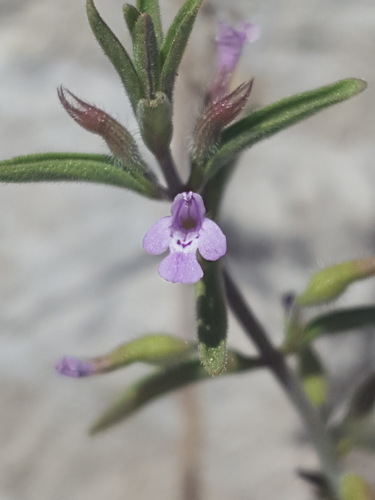
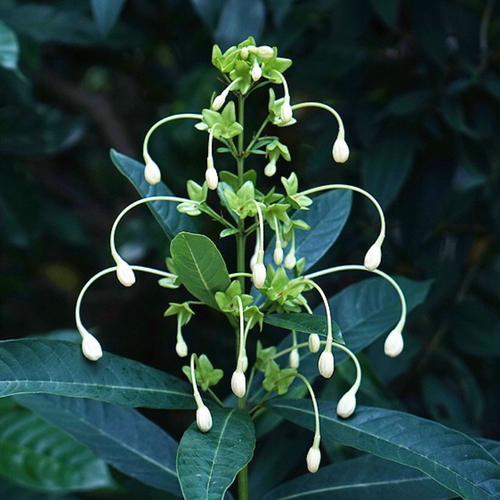
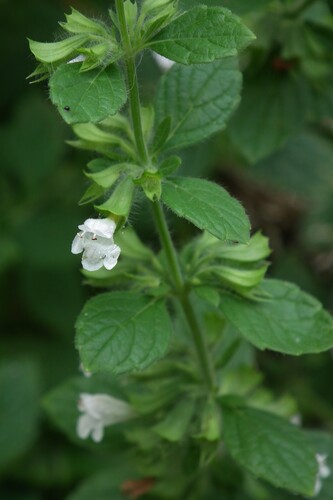
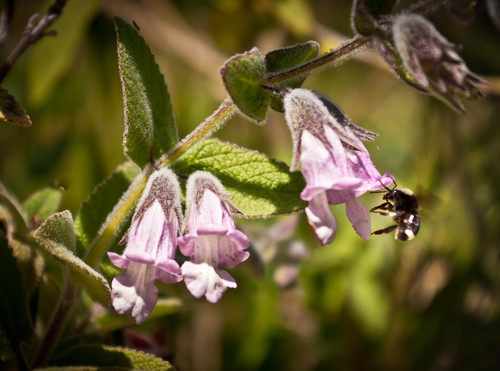
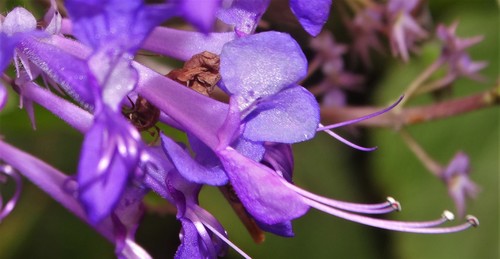
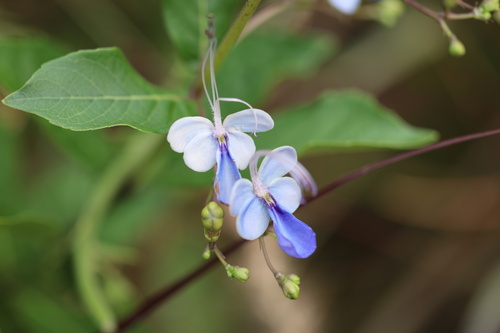
Rotheca myricoides (Hochst.) Steane & Mabb., commonly called Butterfly Clerodendrum or Butterfly Bush (note that the name butterfly bush is also used for Buddleja species), is a flowering plant species in the family Lamiaceae. It is native to tropical eastern Africa and widely cultivated in other regions. In cultivation, it is often referenced by one of its synonyms, most commonly Clerodendrum myricoides. The cultivar 'Ugandense' is an untidy evergreen shrub that grows to 4 m (13 ft) tall and 2.5 m (8.2 ft) broad. It produces oval leaves and large numbers of pale violet-blue butterfly-shaped flowers in summer and autumn, with each flower bearing a darker blue lower petal. This cultivar requires a minimum temperature of 10 °C (50 °F), so it can only be grown under glass in temperate zones. The overall altitude range for this species is 900–1680 m, and the 'Ugandense' cultivar has earned the Royal Horticultural Society's Award of Garden Merit. Rotheca myricoides is native to mountainous areas stretching from Eritrea to South Africa, specifically native to Angola, Botswana, Burundi, Caprivi Strip, Democratic Republic of the Congo, Djibouti, Eswatini, Eritrea, Ethiopia, Kenya, KwaZulu-Natal, Malawi, Mozambique, Namibia, Northern Provinces, Rwanda, Somalia, Sudan, Tanzania, Uganda, Zambia, and Zimbabwe. It has been introduced to Trinidad-Tobago, Australia, and Brazil. This species can be found in rocky areas, along streams, and at the edges of evergreen forests. The shrub grows best in frost-free climates, and can tolerate conditions from full sun to part shade. It prefers part shade, and moist, well-drained soils with high organic matter content. In colder climates, 'Ugandense' is often grown in containers because it cannot survive temperatures below 10°C (50°F). If temperatures drop below -3.9°C (25°F), the above-ground growth of the plant may die, but it can regrow from its roots in spring. Rotheca myricoides interacts with a number of other species. Pseumenes depressus, the Asian hornet, and Xylocopa ruficeps all visit the flowers of Rotheca myricoides. Xylocopa phalothorax, Xylocopa tranquebarorum, and Xylocopa nasalis feed on Rotheca myricoides. In its native ecosystems, this plant plays a notable role by supporting pollinators including butterflies and bees. Its long corolla tubes are adapted to attract specific pollinators with long proboscises, enabling effective pollen transfer. Birds that eat the plant's drupes receive food from the plant, and the birds in turn help disperse the plant's seeds. On the Red List of South African plants, Rotheca myricoides is assessed as Least Concern, with the assessment dated 30 June 2005; it is not identified as a taxon that requires conservation attention.