About Rosalia alpina (Linnaeus, 1758)
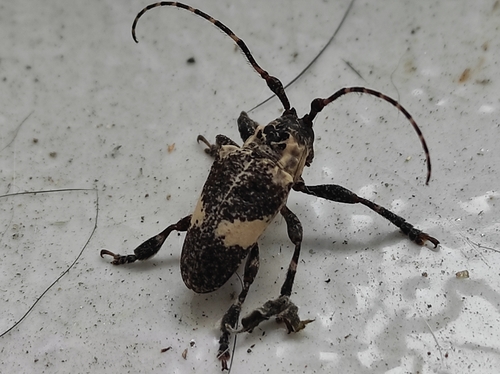
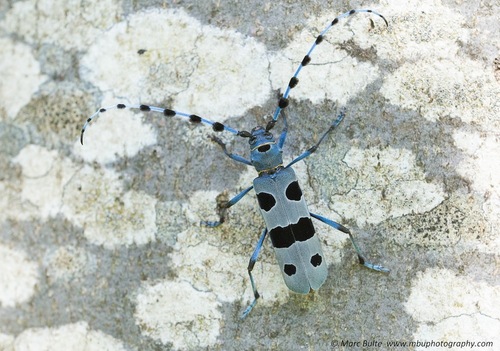
Rosalia alpina, commonly called the rosalia longicorn, measures 15 to 38 mm (0.59 to 1.50 inches) in total length. In males, antennae can reach up to twice the length of the rest of the body, while female antennae match the length of the rest of the body. Its elytra are flat and blue-gray, marked with variable black spots that include a prominent spot on the thorax, a silky spot toward the front, and a small spot toward the back. The antennae and legs share the same coloration as the body, which provides effective camouflage in the beetle’s preferred habitat of European beech trees. The species ranges from the Cantabrian Mountains eastward to the Caucasus. Its population across Europe has declined sharply in recent years, and it is a protected species in Germany, Hungary, Italy, Poland, Serbia, and Slovakia. Adult rosalia longicorns are active from June through September. During the day, they rest near flowers and feed on pollen. They can produce a chirping sound by scraping their rear legs against their elytra. After mating, females lay eggs inside cracks in the bark of beech trees. Larvae feed on the bark, and remain in the bark to pupate once they reach approximately three years of age. After emerging from the pupal stage, mature adults live an additional three to six weeks. In Hungary, the rosalia longicorn serves as the logo of Danube-Ipoly National Park. This beetle inhabits sun-exposed beech forests and forest clearings.