About Rosa laevigata Michx.
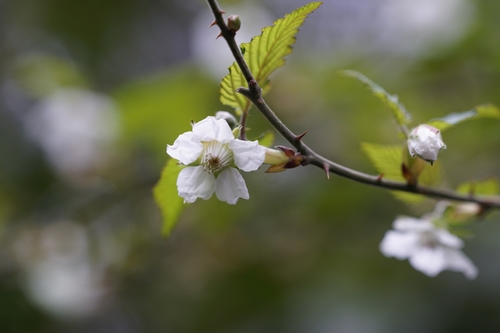
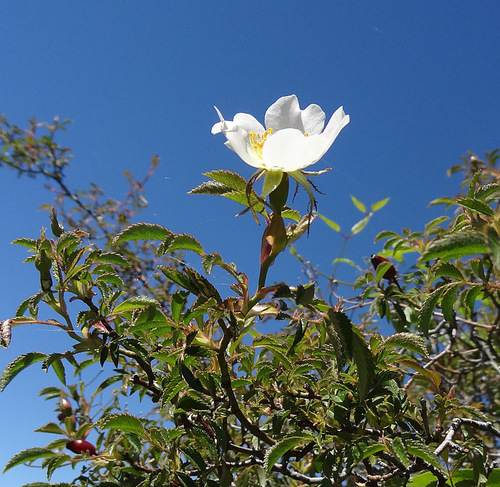
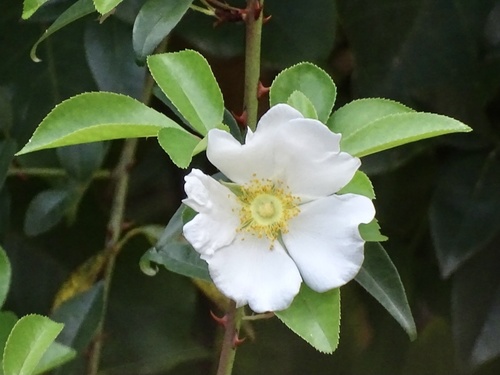
Rosa laevigata Michx. is an evergreen climbing shrub that scrambles over other shrubs and small trees, reaching heights of 5 to 10 meters (16 to 33 feet). Its leaves measure 3 to 10 centimeters (1.2 to 3.9 inches) long; they typically have three leaflets, occasionally five, and are bright glossy green and glabrous. The flowers are 6 to 10 centimeters (2.4 to 3.9 inches) in diameter, fragrant, with pure white petals and yellow stamens. After flowering, the plant produces bright red, bristly hips that are 2 to 4 centimeters (0.79 to 1.57 inches) in diameter. The flower stem is also very bristly. This species was introduced to the southeastern United States around 1780, where it quickly became naturalized, and it was given its English common name after this introduction. Rosa laevigata has a history of use in traditional Chinese medicine, with its first documentation dating to between 935 and 960 AD. Different parts of the plant, most notably the fruits (called Jin Ying Zi) and roots (called Jin Ying Gen), have been used for their reported therapeutic properties. In traditional Chinese medicine, the fruit has traditionally been linked to effects including consolidating "essence", reducing frequent urination, treating metrorrhagia, and acting as an intestinal astringent to manage diarrhea. The root has traditionally been used to strengthen "essence", act as an intestinal astringent, and treat conditions including spermatorrhea, enuresis, dysentery, diarrhea, metrorrhagia, uterine prolapse, hemorrhoids, and burns. Regional Chinese medicinal records also note its use for hypospermia, leucorrhea, pubic erections, chronic deficiency diarrhea, dysentery, stomach discomfort, children's enuresis, bruises, lumbar spinal discomfort, rheumatic joint pain, and uterine prolapse. Modern pharmacological research has explored the potential medicinal uses of Rosa laevigata, and some studies have identified various biological activities. Both fruit and root extracts have shown early signs of antioxidant, anti-inflammatory, antiviral, and anti-tumor effects in experimental models. Additionally, observations indicate these extracts may have renal protective, immunomodulatory, lipid-lowering, cardiovascular protective, and bacteriostatic properties. Certain extracts have been studied for their potential to treat age-related urinary incontinence, support kidney function, reduce frequent night urination, and potentially affect gastrointestinal tract function.