About Rosa gymnocarpa Nutt. ex Torr. & A.Gray
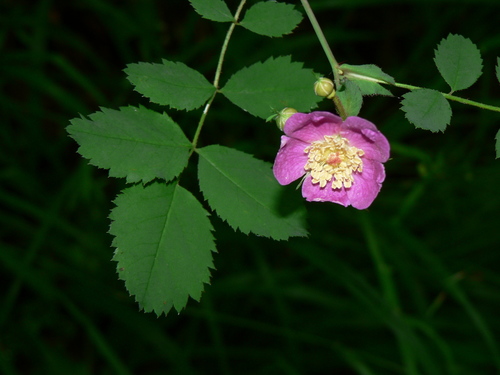
Rosa gymnocarpa Nutt. ex Torr. & A.Gray, commonly called baldhip rose, is a perennial deciduous shrub. It grows to a maximum height of 2 metres (6.6 ft). Its slender stems are covered in varying numbers of long, straight prickles, and the shrub produces rhizomes and shallow roots. It is adapted to low- to medium-intensity fires, and will resprout from root crowns and rhizomes after a fire. This species begins flowering when it is 3 to 5 years old. Its fragrant flowers, which are pink or white, bloom in late spring or early summer. The flowers are flat and open-faced, with five petals that can range from nearly any shade of pink to almost lavender. Its fruit is a red rose hip that holds hard tan achenes, which contain the plant's seeds. Birds and mammals eat the fruit, and disperse the plant's seeds in the process. Unlike other rose species, the sepals of Rosa gymnocarpa fall away from the hip early, which gives the species its common name of baldhip rose. The hips stay on the plant through the winter season. The leaves of Rosa gymnocarpa are alternate and pinnately compound, with 5 to 9 leaflets per leaf. Each leaflet measures 1 to 2.5 cm long and 0.6 to 1.2 cm wide, and ranges in shape from elliptic to ovate to round.