About Romalea microptera (Palisot de Beauvois, 1817)
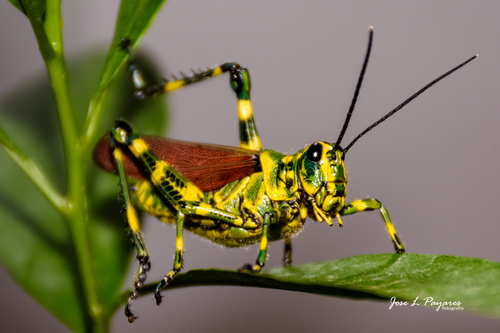
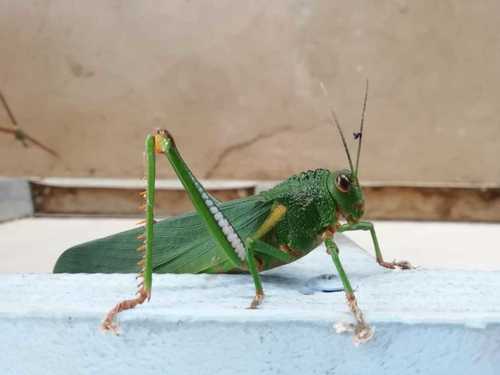
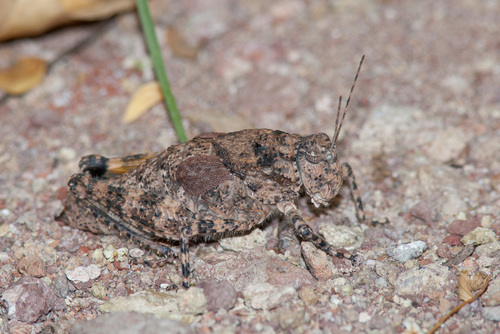
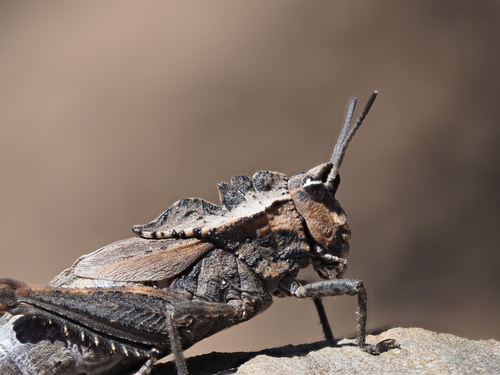
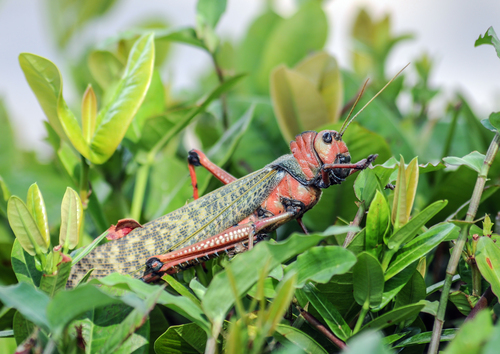
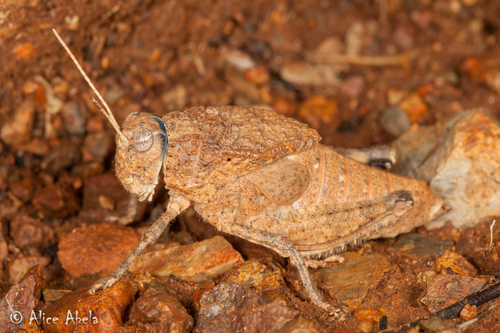
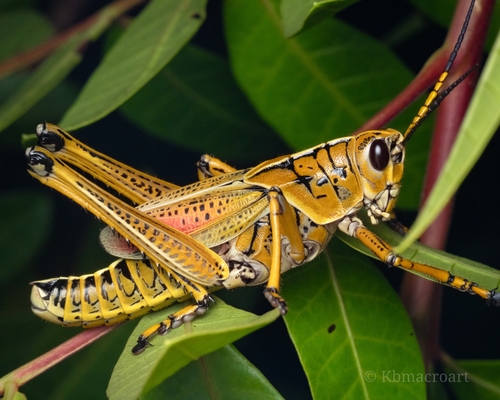
Romalea is a genus of grasshoppers native to the southeastern and south-central United States. As traditionally defined, the genus contains only one species: Romalea microptera (Palisot de Beauvois, 1817). This species has several common names: Georgia thumper, eastern lubber grasshopper, Florida lubber, and Florida lubber grasshopper. However, some recent taxonomic authorities treat the genus Taeniopoda as a junior synonym of Romalea. Under this classification, Romalea includes about a dozen total species found across the southern United States, Mexico, and Central America. R. microptera is one of the most easily recognizable grasshopper species in the southeastern United States, well known for its relatively large size and unique coloration. The range of R. microptera extends west from North Carolina to Tennessee, and includes Georgia, Alabama, Mississippi, Louisiana, Arkansas, Texas, and all of Florida. This species inhabits open pinewoods, weedy vegetation, and weedy fields. Like all insects, R. microptera develops through multiple life stages. In its nymph stage, it is smaller than the adult, wingless, and completely black with one or more yellow, orange, or red stripes. Adult R. microptera have wings that reach only half the length of their body. Adults can have several different color patterns: a dull yellow base with black spots and markings, a bright orange base with black markings, or an all-black base with yellow or red striping (the same pattern seen in nymphs). Black-phase adult R. microptera are commonly called "diablo" or "black diablo". In Louisiana, this species is known as "devil's horse" or cheval-diable. It is also colloquially called the "graveyard grasshopper", and in Mississippi it is called the "giant locust".