About Rivula basalis Hampson, 1891
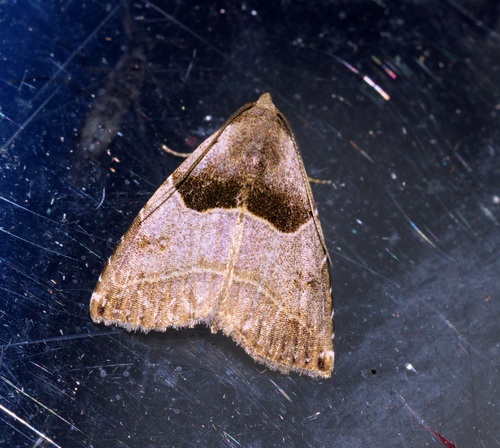
This species, Rivula basalis Hampson, 1891, shows sexual dimorphism in adult coloration: females are ochreous with a rufous-brown tint, while males are paler. The basal area of the forewing is significantly darker than the rest of the wing. The antemedial line on the forewing is obtusely angled, and a pale postmedial line that angles subcostally is visible. Dark shading surrounds the bipunctate discal mark on the forewing. Males have a subtornal cleft in the distal margin of the hindwing. The caterpillar has a greenish cylindrical body, with a fine white subdorsal line running along its length. It has a broken, irregular, broad yellow spiracular band, and its inter-segmental membranes are reddish. The caterpillar’s head is bright yellowish, heart shaped, and marbled with blood red. Pupation takes place inside a cocoon located at the tip of a leaf. Known host plants for this species are grasses.