About Ribes aciculare Sm.
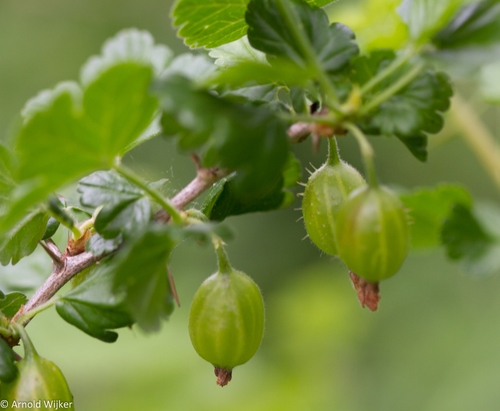
Ribes aciculare Sm. is a species of flowering plant in the Grossulariaceae (currant and gooseberry) family, and is generally recognized as closely related to Ribes burejense. It is native to central and northern Asia, with confirmed native distributions in Altay, Kazakhstan, Krasnoyarsk, Mongolia, Tuva, West Siberia, and Xinjiang. It occupies a range of habitats, from stony hills and mountain slopes to forest margins and thickets. In Northern China, it has been recorded growing at altitudes between 1,500 and 2,100 metres. This plant is highly cold hardy, and can tolerate temperatures as low as -20°C while dormant, most commonly during winter. It typically grows as a deciduous shrub reaching about 1 metre in height or slightly taller. Its branchlets are glabrous, and 3 to 5 spines form at each node of the branchlets. It can grow in either semi-shade, such as light woodland, or full sun with no shade. It can survive in light sandy soils, medium loamy soils, and heavy clay soils, with pH levels ranging from acidic to neutral to alkaline. It grows best in moist but well-drained soil, and tends to produce more fruit when grown in full sun without shade. It flowers from May to June. The species is hermaphrodite, and its flowers are pollinated by insects. Fruits ripen from July to August; they are red, spherical, and grow up to 15 millimetres in diameter, similar in form to fruits of other species in the genus Ribes. The fruit is edible both raw and cooked, with a sweet, pleasant flavour. The fruit is harvested from wild plants for local use, and it is sometimes cultivated as a fruit crop in parts of Russia. Cultivated populations include several named varieties, some of which are likely crosses with gooseberry (Ribes uva-crispa). Like other species in the genus Ribes, R. aciculare is particularly susceptible to honey fungus. It can also be infected by white pine blister rust (Cronartium ribicola), a rust fungus with a heteroecious life cycle that requires infection of a Ribes plant as an obligate secondary host.