About Rhyzobius lophanthae (Blaisdell, 1892)
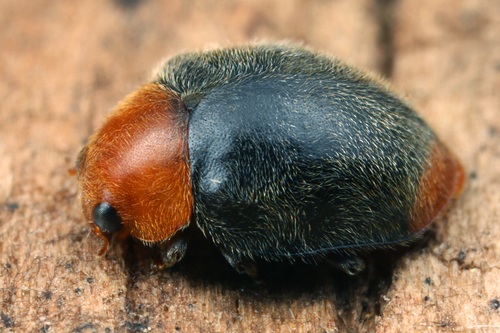
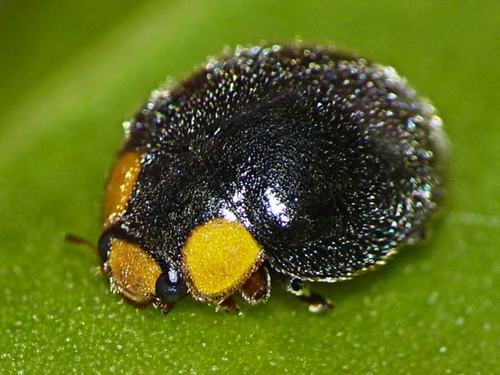
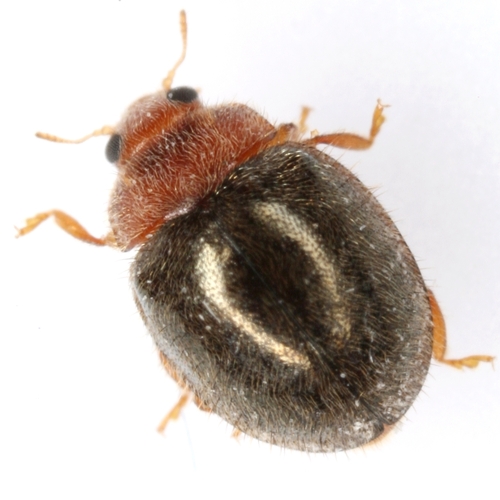
Rhyzobius lophanthae is a small ladybird, measuring between 1.7 and 2.85 mm (0.07 and 0.11 in) in length, and between 1.35 and 2.0 mm (0.05 and 0.08 in) in width. Its head, prothorax, and underside are all reddish-brown, and all of these areas are densely covered with short hairs of two different lengths. The elytra (wing cases) are blackish, and often have a metallic bronze sheen. The larvae are dark brown, and covered in stout spines. Rhyzobius lophanthae is native to Australia, where it occurs in Queensland and Southern Australia. It was introduced to California in 1892 in an effort to control olive scale (Saissetia oleae), and has since spread across most of the southern United States. It can also be found in Europe. Both adult and larval Rhyzobius lophanthae feed on scale insects, particularly armoured scales during all stages of the scales' development. They also feed on mealybugs. Young beetle larvae crawl under the protective scale covering of adult scale insects, and feed on scale nymphs before the nymphs can disperse. Scale insects are pests of citrus that suck sap from host plants, and this ladybird has been used for biological pest control to reduce scale insect populations in citrus crops.