About Rhytidiadelphus loreus (Hedw.) Warnst.
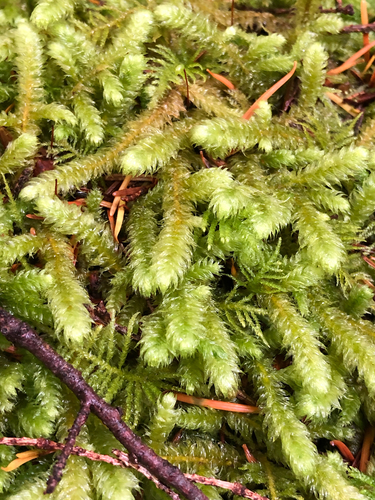
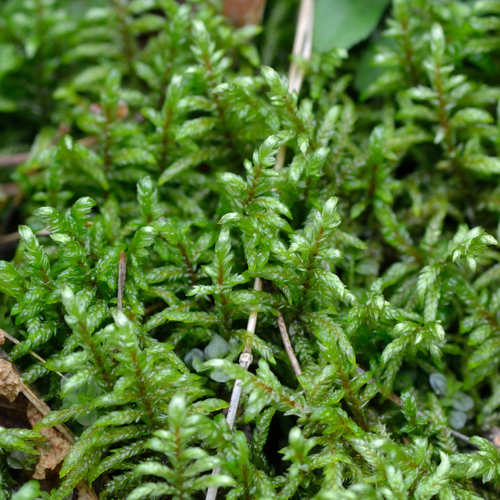
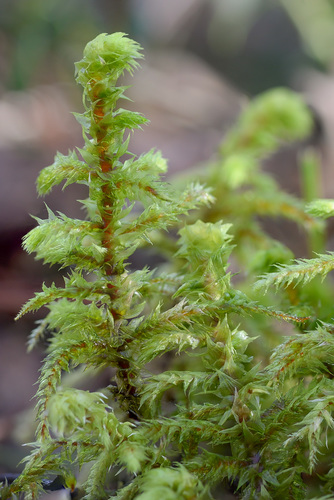
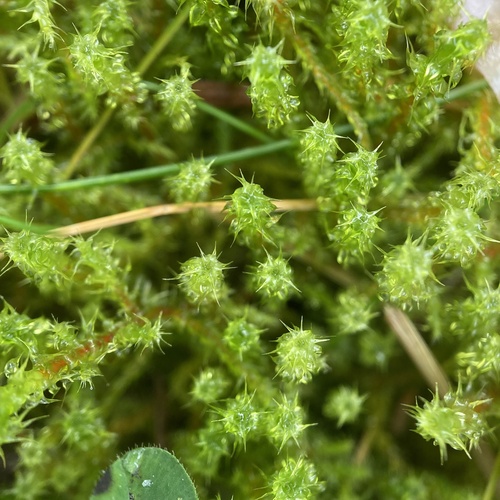
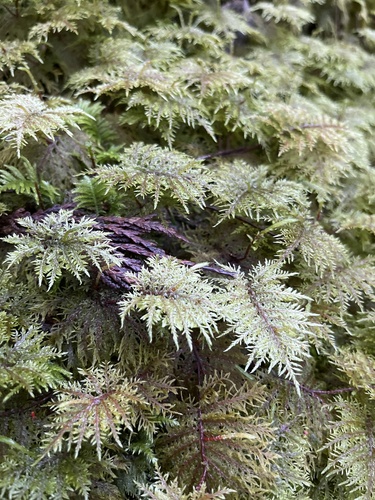
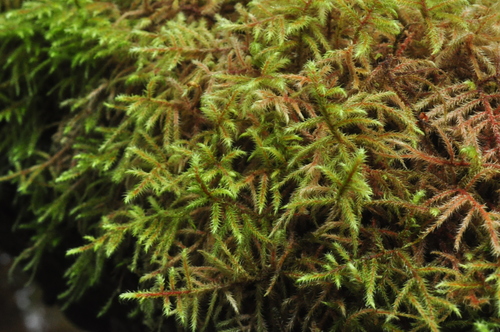
Rhytidiadelphus loreus, commonly called lanky moss, is a large, creeping, branched moss species. Its pleated leaf arrangement gives it a striped appearance. The leaves are glossy, heart-shaped (cordate), and grow in irregular patterns on pinnate branches; they reach 4 to 5 millimeters in length. Leaf color ranges from yellow to dark olive green. The plant’s stems are rigid, with a brown and red appearance. Lanky moss grows outward horizontally, forming large, interwoven, unconstrained mats that act as carpets across the forest floor. These mats can grow up to 15 centimeters thick as they spread. Though the moss looks prickly, its leaves are soft to the touch and have a spongy texture. The mats serve as insulators, and also retain water and nutrients. Rhytidiadelphus loreus is widespread, found in the United States, Canada, and Europe. In the United States, it occurs specifically in southeast Alaska, California, and eastern Montana. In Canada, it is found in the provinces of British Columbia, New Brunswick, Nova Scotia, and Quebec. In Europe, it is mostly found in mountainous regions, where moisture collects in shaded mountain pockets; it grows in north-western Europe, including Norway, Iceland, Ireland, Greenland, and the northern and western parts of the UK. Lanky moss is typically a coastal species that grows in moist environments, preferring shady, dark locations. It occurs from low elevation up to subalpine elevations of 4,000 feet. It is a dominant moss species covering the forest floor in coniferous forests. It commonly grows over decomposing wood such as fallen trees and rotting logs, and can also grow on rocks. It may grow epiphytically at the base of living trees. It grows exceptionally well on soil types including raw humus, acid humus, and peat, thriving on the moisture, decaying matter, and nitrogen found in the top layers of these soils. Rhytidiadelphus loreus is a flourishing, abundant moss that is not at risk of extinction, and it is not listed on the COSEWIC website. Rhytidiadelphus loreus is a dioicous plant, meaning male and female gametes are produced on separate individuals. Its sporophytes have an irregular formation and growth pattern. The species reproduces occasionally and sporadically. Sporophytes protrude from the stem on stalks 2 to 6 centimeters long, ending in a sub-spherical sporangium. Spores mature during the cold winter months.