About Rhynchospora plumosa Elliott
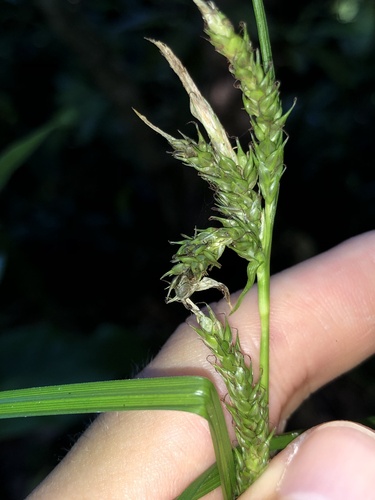
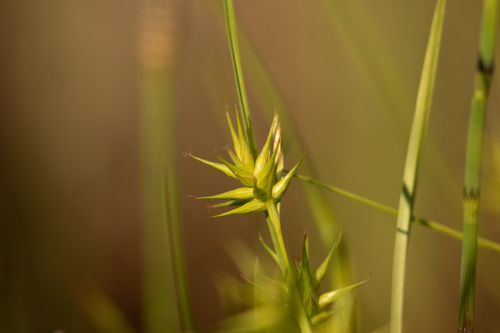
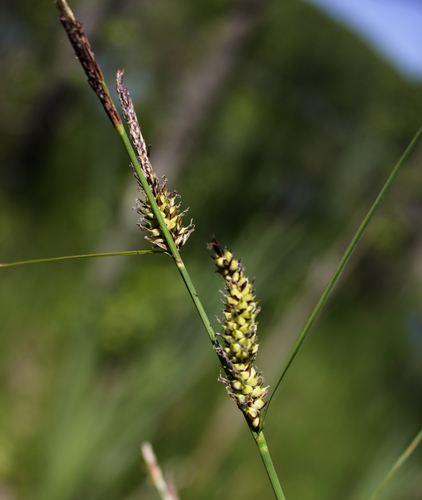
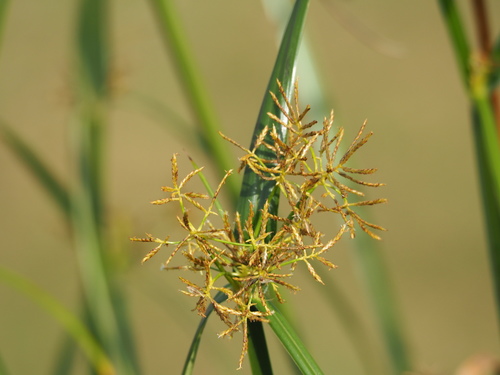
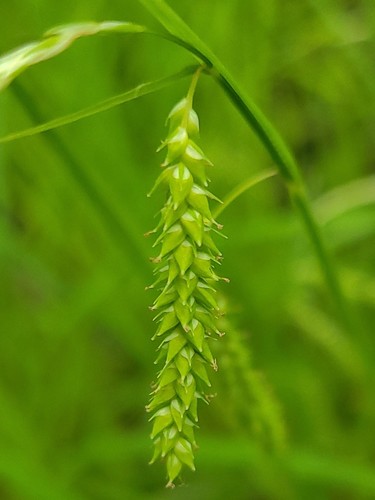
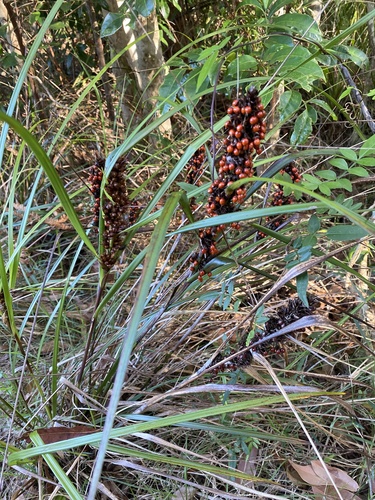
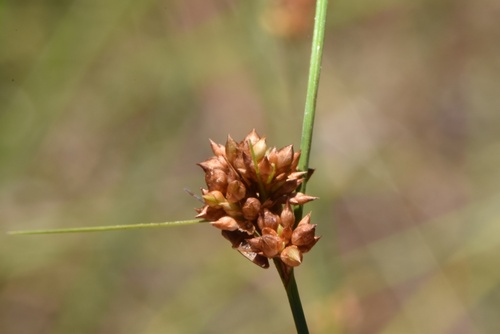
Rhynchospora plumosa Elliott grows 20–80 cm tall, occasionally as short as 10 cm, and forms dense clumps with no rhizomes. Its stems are upright or slightly curved, slender and thread-like. Leaves are also slender, reaching up to 1.5 mm wide, and are shorter than the flowering stem; they have rolled margins and taper to three-angled tips. The base of the plant ranges from pale to dull brown. Its inflorescences are made up of one or more dense or loose clusters of spikelets. When multiple clusters are present, they may be widely spaced and shaped egg-shaped to hemispheric, or closely packed to form a lobed ellipse or cylinder. Each cluster is subtended by a fine, bristle-like bract that usually extends above the flowers. Spikelets are reddish to dark brown, spindle-shaped to oval, 3.5–4 mm long, with pointed tips. Each flower has six long, feather-like bristles, and typically produces one reddish-brown, rounded to oval fruit measuring 2–2.5 mm. The fruit has a finely wrinkled surface and a small, cone-shaped tubercle at its top. Rhynchospora plumosa is distributed across the United States, the West Indies, Belize, Honduras, and Nicaragua. Within the United States, it occurs from North Carolina south to South Florida and west to southeastern Texas. It grows in pine savannas and sandhill-pocosin ecotones, particularly in areas where the sandy surface dries out during the summer. In longleaf pine forests of the southeastern United States, Rhynchospora plumosa benefits from shorter fire return intervals, and is common during the second winter after a fire. It has been found in undisturbed longleaf sites in North Carolina, but not in highly disturbed sites. It also shows poor resistance to regrowth in reestablished longleaf sites that were previously disturbed by heavy silvicultural practices.