About Rhus trilobata Nutt.
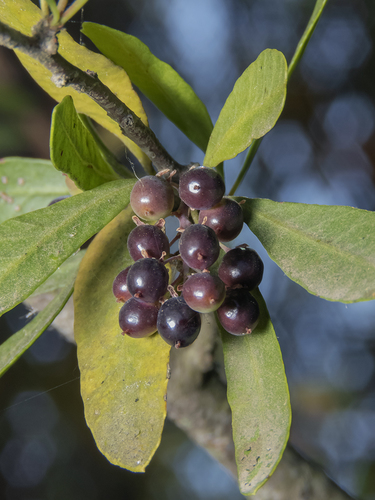
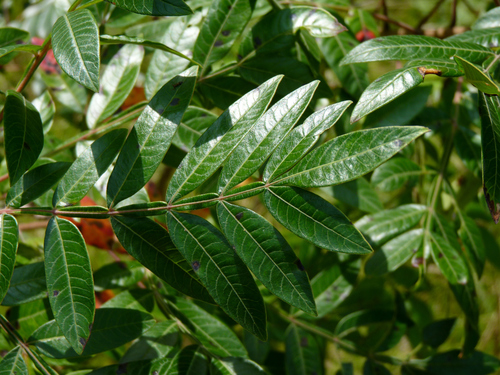
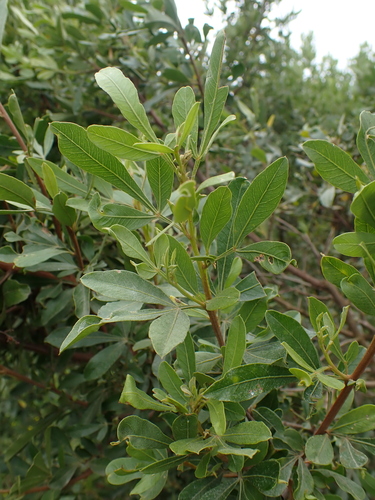
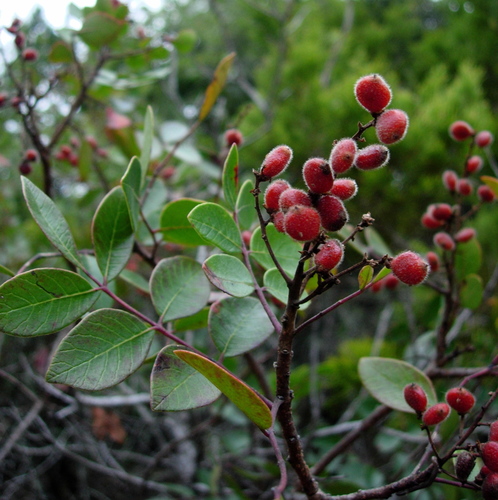
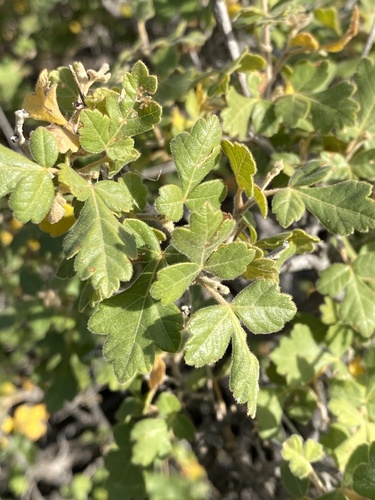
New twigs of Rhus trilobata Nutt. are fuzzy, and become smooth as they age. Leaves grow up to 1.5 centimetres (1⁄2 inch) long, and release a very strong bitter, often disagreeable odor when crushed. This unpleasant scent gives the plant its common name skunkbush. New leaves are green, and turn orange and brown in autumn. Yellowish-green flowers grow on small catkins (short shoots), and are pollinated by animals. This plant produces hairy, slightly sticky reddish-orange berries that smell similar to limes and have a very sour taste. The sour acidity of the berries comes from tannic acid and gallic acid. Seeds are dispersed by animals that eat the berries. This shrub can also reproduce vegetatively: it sends up sprouts several meters away from the parent plant to form thickets.
Rhus trilobata Nutt. is native to the western half of Canada and the Western United States, ranging from the Great Plains to California, and extends south through Arizona into northern Mexico. It grows at elevations from deserts up to mountain peaks around 2,100 metres (7,000 ft), and can be found in many types of plant communities, including grasslands east of the Rocky Mountains, mountainous shrubland, pine, juniper, and fir forests, wetlands, oak woodlands, and chaparral. While wildfire destroys the above-ground portions of the plant, it rarely kills Rhus trilobata Nutt., and the shrub readily sprouts back in burned areas.
The berries are an important winter food source for many birds and some small mammals. Historically, skunkbush sumac has been used for medicinal and other purposes. Bark has been chewed or brewed into a drink to relieve cold symptoms; berries have been eaten to treat gastrointestinal complaints and toothache; leaves and roots have been boiled and eaten to address a wide range of complaints. Leaves have also been smoked. The plant's flexible branches were valued for twisting into basketry and rugs. Though sour, the berries are edible. They can be baked into bread, mixed into porridge or soup, or steeped to make a tea or tart beverage similar to lemonade. Berries can also be eaten directly, and adding a small amount of salt can improve their flavor. According to Marvin Johnson Jr, a Mono native from Cold Springs Rancheria, a federally recognized tribe based in Tollhouse, California, dried berries stored in flats will last throughout the year, and only need a small amount of added moisture when ready to be eaten.
This species is sometimes planted for erosion control and landscaping, and is used to reclaim barren land that has been stripped by mining. Multiple Indigenous groups including the Zuni people, Navajo, Mono tribe of California, and other regional tribes use stems with the bark removed to make baskets. The Uncompahgre Ute call the berries mah wup, and the bush ece.