About Rhus aromatica Aiton
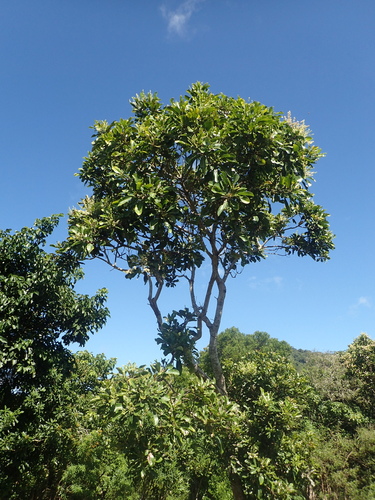
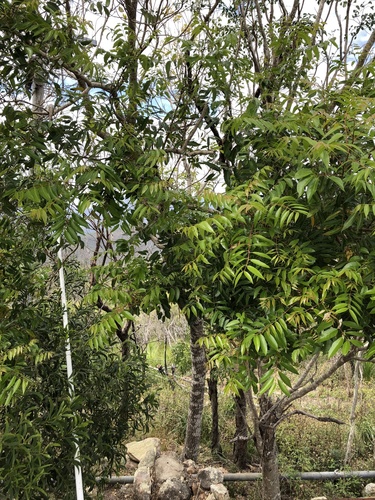
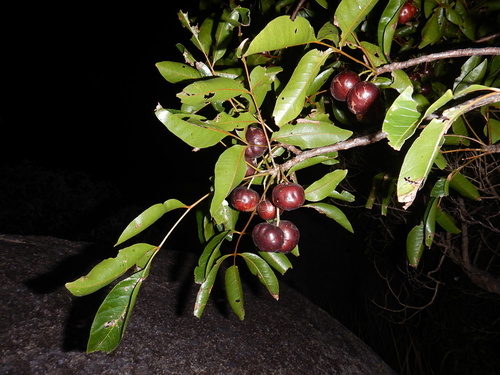
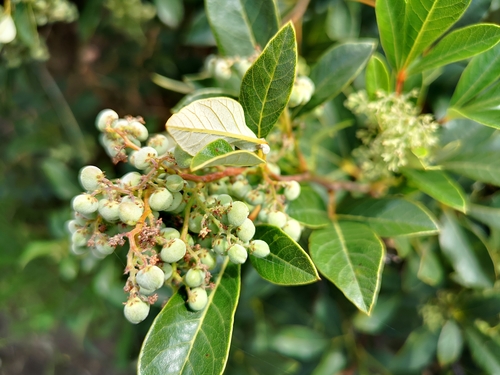
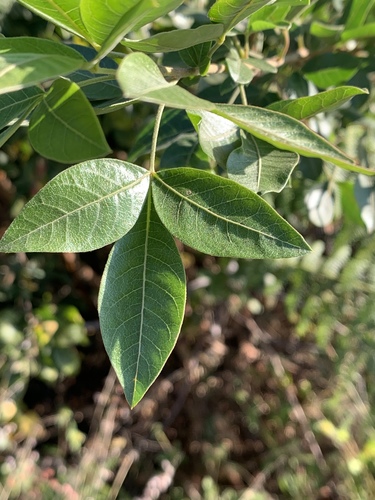
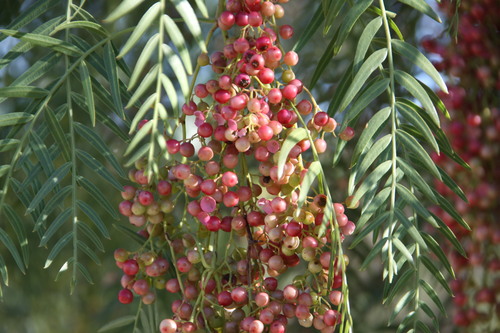
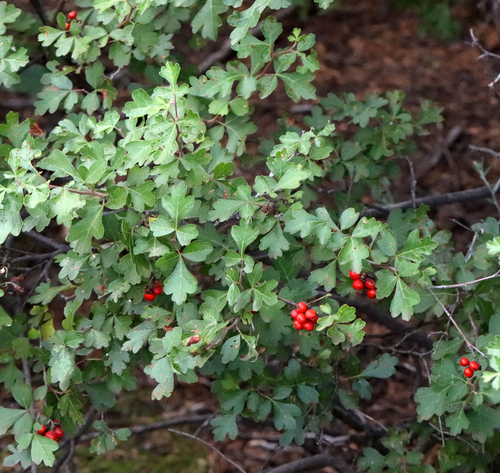
Rhus aromatica Aiton, commonly called fragrant sumac, is a woody plant with a rounded growth habit. It typically reaches 2 feet (0.6 meters) to 5 feet (1.5 meters) in height, and spreads 5 feet (1.5 meters) to 10 feet (3.0 meters) wide. It produces clusters of yellow flowers on short lateral shoots from March to May. These flowers form small, dense inflorescences that usually open before the plant’s leaves emerge, and both flowers and drupes appear earlier in the year than they do on other sumac species. This species is polygamodioecious: it is mostly dioecious, meaning individual plants primarily bear flowers of only one sex, but will also have a small number of flowers of the opposite sex or a few bisexual flowers on the same plant. Male staminate flowers grow in yellowish catkins, while female pistillate flowers grow in short bright yellow panicles at the ends of branches. After pollination, clusters of hairy red drupes, each 5 millimeters (0.2 inches) to 7 millimeters (0.3 inches) wide and holding a single nutlet, develop between June and August. The fruits remain an important winter food source for birds and small mammals, and will stay on the plant until spring if left uneaten. The plant has alternate leaves that are usually compound, with three leaflets that vary in shape, lobing, and edge shape. One leaf variety grows in dry areas of southwestern North America. The unstalked leaflets range from ovate to rhomboid, are more or less wedge-shaped at the base, have coarse teeth, and are usually shiny and hairless on the upper surface. The terminal leaflet measures 3 centimeters (1.2 inches) to 6.5 centimeters (2.6 inches) long. The foliage is green to glossy blue-green in summer, and turns orange, red, or purple in the fall. Stems are thin and brownish-gray; young stems have rust-colored lenticels. When crushed, leaves and stems release a lemon scent. The plant has no terminal buds, but overwintering male catkins are present. Fragrant sumac is common along the forested eastern margins of the Great Plains, and in open or disturbed sites on the margins of Gulf Coast prairie. It grows in a range of habitats including open rocky woodlands, valley bottoms, lower rocky slopes, and roadsides. It is not widely used in landscape plantings, but can be grown as a ground cover, especially on banks, with its colorful fall foliage as its main ornamental feature. It tolerates growing conditions from deep shade to full sun, and grows best in well-drained soils with pH ranging from slightly acidic (about 6.0) to alkaline (about 8.5). It has a shallow, fibrous root system and transplants easily. Some of its branches can trail along the ground and develop roots, and the plant produces ground suckers to form large colonies. The thickets it develops provide shelter for small mammals and birds. Its underground rhizomes and roots allow Rhus aromatica to resprout after fire events. Historically, Native American tribes used fragrant sumac to treat a range of health problems and illnesses. Ripe berries were made into a tart drink. Leaves and bark were used in leather working because of their high tannin content, and leaves were mixed with tobacco to make a smoking mixture. Rhus aromatica can be used to stabilize soil and prevent erosion on embankments or other hard-to-vegetate areas. In vitro studies have found that aqueous extractions of Rhus aromatica show strong antiviral activity against two types of herpes.