About Rhododendron periclymenoides (Michx.) Shinners
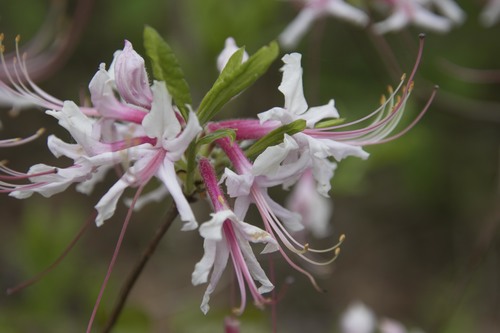
Rhododendron periclymenoides (Michx.) Shinners grows throughout the Eastern United States, ranging from southern New York south to Georgia, with isolated populations found in Midwestern states. It favors habitats including swamp margins, moist woods, and open areas that receive full to partial sunlight, or high open shade. This species grows best in acidic soils that are rich in humus, hold moisture, and still provide some drainage. It is commonly found in the oak-hickory, oak-pine-spruce-fir, maple-beech-birch, and white-ed-jack pine ecosystems. Its most common pollinators are hummingbirds and butterflies. According to the United States Forest Service, wildfires typically top kill azaleas. After a wildfire passes through an area, R. periclymenoides can resprout from subsurface structures. Rhododendron periclymenoides contains low levels of toxicity; all parts of the plant may cause vomiting or diarrhoea if eaten in large quantities. The poisons produced by rhododendrons are called grayanotoxins, a class of neurotoxins. These neurotoxins act by blocking the inactivation of sodium channel receptors, leading to cell dysfunction. Honey produced by bees that collect pollen from Rhododendron genus species is known as "mad honey". Humans who eat this honey develop the symptoms mentioned above, plus hypotension and other cardiac rhythm irregularities. Human poisoning from rhododendrons outside of mad honey ingestion is rare, but pets and other livestock can still consume parts of this plant. While mad honey is not common in the United States, it is thought to have medicinal qualities in China.