About Rhodinocichla rosea (R.Lesson, 1832)
Nomenclature and Length
Rosy thrush-tanager (Rhodinocichla rosea (R.Lesson, 1832)) measures approximately 20 cm (8 in) in length.
Male Plumage
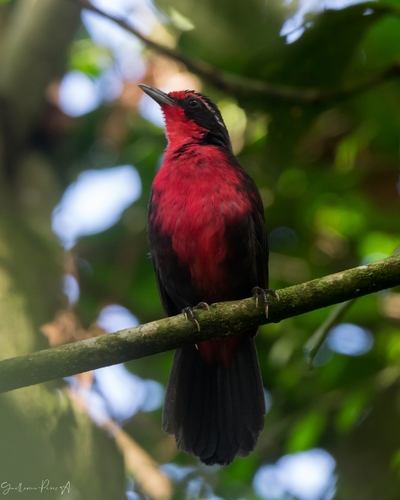
Males are a distinctive species with a long streak above the eye that is pink in front of the eye and white behind it. Their upperparts are dark brownish-black, their flanks are dusky grey, and their underparts and the leading edge of the wing are both magenta.
Female Plumage
Females are generally similar to males, but the rosy-magenta coloration is replaced by deep ochre.
Beak Morphology
The species has a long, slightly curved beak that resembles the beak of a mimid.
Geographic Distribution
This bird is distributed across Central America and northern South America, with populations found in Mexico, Costa Rica, northern Venezuela and northern Colombia.
Habitat Types
Its typical habitat is thick undergrowth in deciduous forests, secondary woodland, thickets and scrubland.
Altitudinal Range
It occurs most often in mountain foothills, at altitudes between 500 and 1,500 m (1,600 and 4,900 ft).
Social Structure
Rosy thrush-tanagers usually occur singly or in pairs.
Foraging Behavior
They flit through low undergrowth or hop along the ground, turning over leaf litter with their beaks.
Observability Traits
They are shy, rather furtive birds that are difficult to observe, but they respond well when a recording of their voice is played.
Vocalization Patterns
Their song consists of a rich sequence of clear notes, and is sometimes sung as a duet with two birds alternating notes. This is the only tanager species known to sing in this duetting pattern.
Diet Composition
The diet of the rosy thrush-tanager is a mix of animal and plant matter.
Breeding Periods
Breeding has been recorded in July in Mexico, and between January and September in Costa Rica.


