About Rhionaeschna californica (Calvert, 1895)
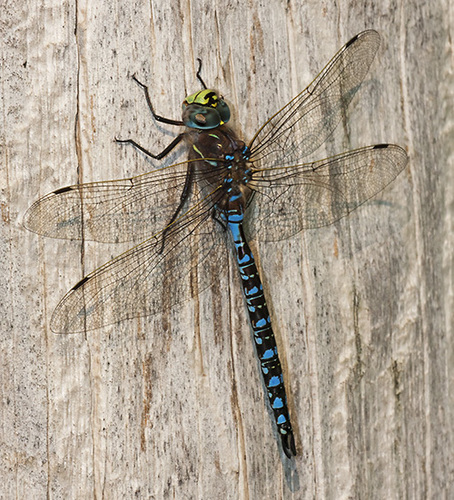
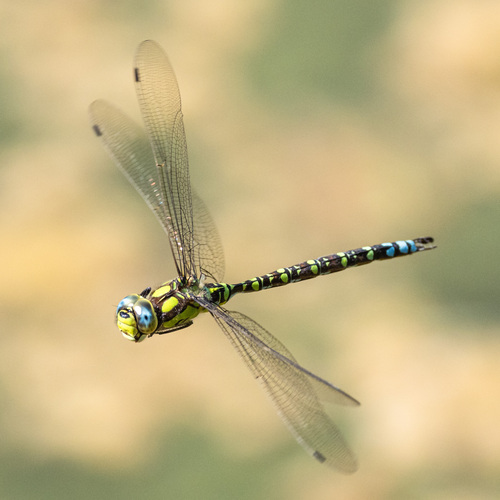
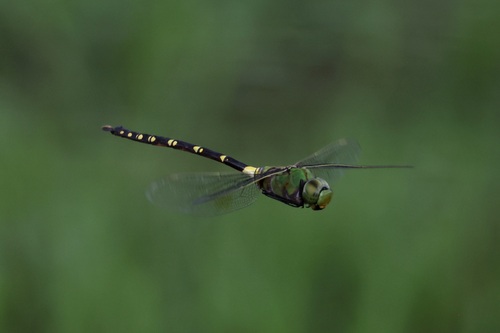
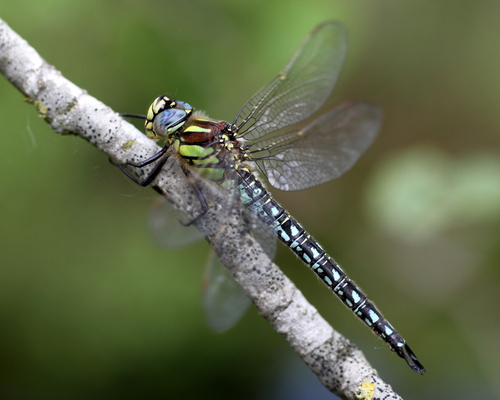
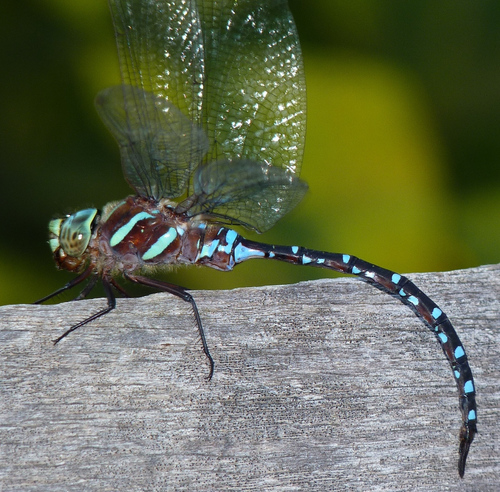
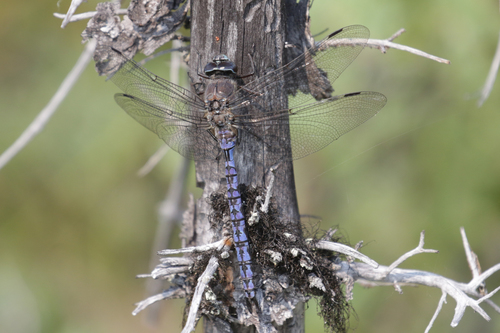
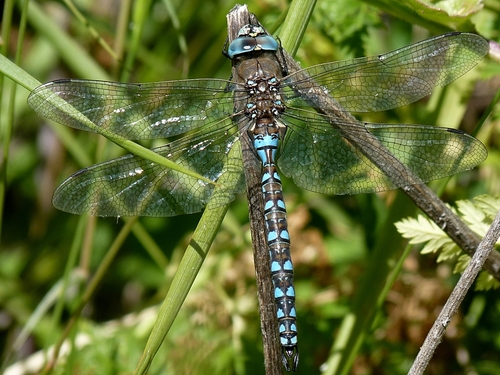
This species is commonly known as the California darner, with the scientific name Rhionaeschna californica (Calvert, 1895). As an adult, it is a medium-sized dragonfly, typically between 5.7 and 6.4 centimetres (2+1⁄4 and 2+1⁄2 inches) long. California darners are most easily identified by their distinct bright blue diagonal spots on the abdomen. Males have a dark brown to brownish-black body, with two blue or green diagonal stripes across each side of the thorax; the top of the thorax is plain in color. Most females are polymorphic: they may share the same color pattern as males, or have greenish yellow markings instead of blue. Females are also heteromorphic, with light brown eyes, while males have blue eyes. Adults have a flight season during warmer months, most commonly from mid-April to late June, making it one of the earliest dragonflies to appear in spring. In California specifically, its flight season runs from February to August. California darners are widespread across the Western United States, with the highest concentration of populations ranging from Baja California to southern Mexico. They can also be found in parts of Canada, including Vancouver, and in regions of Central America. Like many other dragonflies, California darners thrive in aquatic environments with abundant freshwater. They are most often found around low-elevation freshwater bodies including lakes, ponds, and marshes. In terms of climate, they are most common in Mediterranean climates like California's semi-arid climate, which has wet winters and dry summers. California darners spend several years maturing as naiads before developing into adult dragonflies. Their transformation to adulthood takes place at night; this is thought to be an adaptation to avoid predation by diurnal predators such as birds, frogs, and fish.