About Rhinocyllus conicus (J.A.Froelich, 1792)
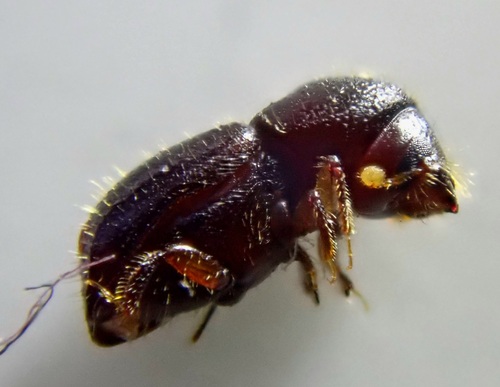
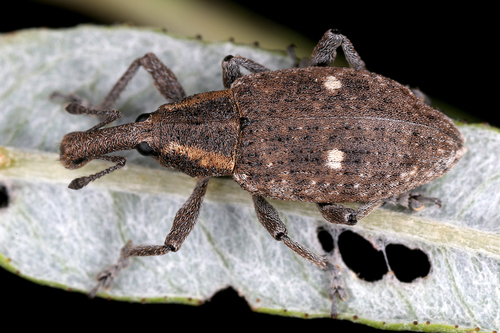
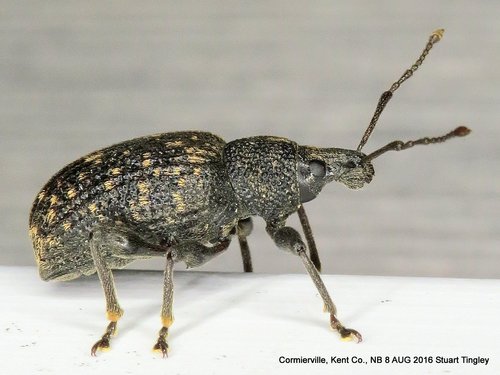
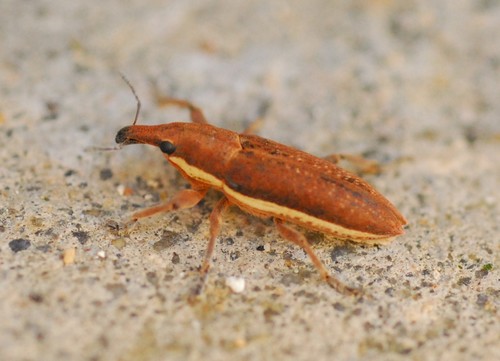
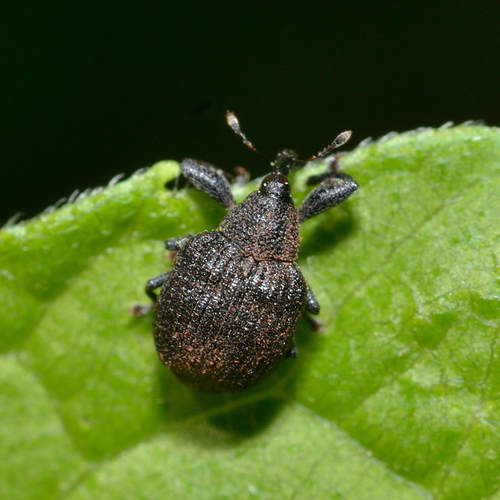
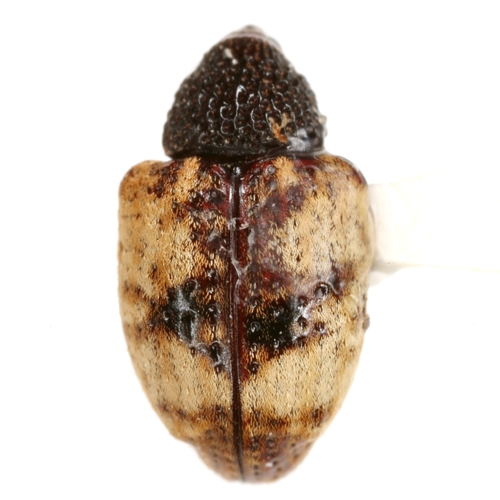
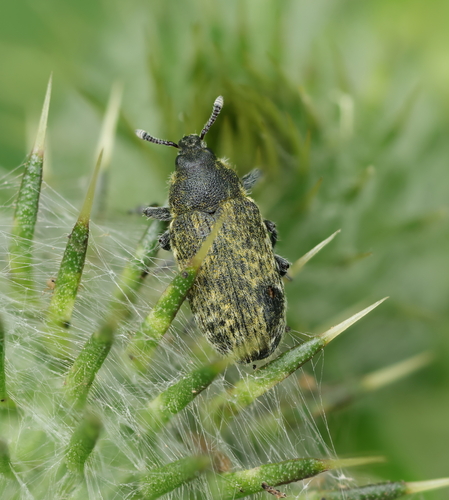
Rhinocyllus conicus is a species of true weevil, best known as a controversial biological pest control agent used against noxious thistles in the genera Carduus, Cirsium, Onopordum, and Silybum. The adult weevil is black, covered by a thin mottled coat of black and yellowish hairs. It is a short-snouted beetle that reaches a maximum total body length of 6 millimeters. The female weevil lays more than 100 eggs on or near the bracts of thistle flower heads. She covers the eggs with chewed plant tissue to protect them from predators. When the white larva hatches, it burrows into the flower head and feeds on flower parts and developing seeds. As it grows, it deposits frass and chewed plant tissue on the walls of its chamber, forming a rigid protective shell where it pupates. Pupation lasts up to two weeks, and after emerging as an adult, the weevil stays inside the chamber for several more weeks before tunneling out of the plant. Most damage to the thistle comes from larvae destroying flower heads, which prevents the plant from producing seeds. A small number of larvae tunnel through the upper stem instead of developing inside a flower head, and this also causes damage to the plant. Adults cause some additional damage when they feed on thistle foliage. Thistles that only reproduce via seed, such as musk thistle, are effectively controlled by this weevil and its seed-destroying larvae. Thistles capable of vegetative reproduction are impacted by the weevil, but can sometimes survive the attack. This weevil is native to Eurasia and North Africa. It was first introduced to the United States in 1969 for thistle biocontrol, and is now widely established across the country. The weevil proved very effective at reducing the spread of invasive thistles, including musk thistle as well as welted, Italian, bull, milk, and other thistles. However, the weevil also readily attacks native thistles in the genus Cirsium, and has contributed to population declines of these native plants in some cases. For this reason, the weevil is no longer recommended for distribution as a biocontrol agent, and further releases are prohibited in many areas.