About Rhamnaceae
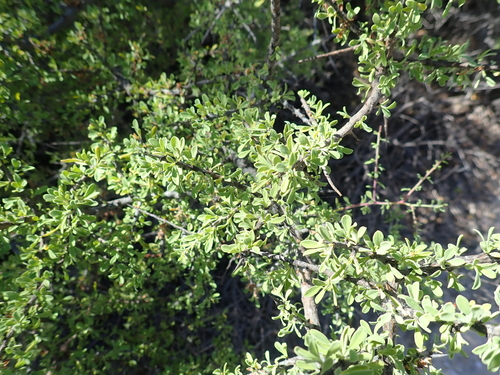
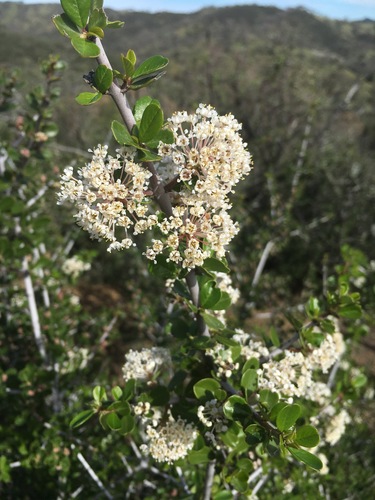
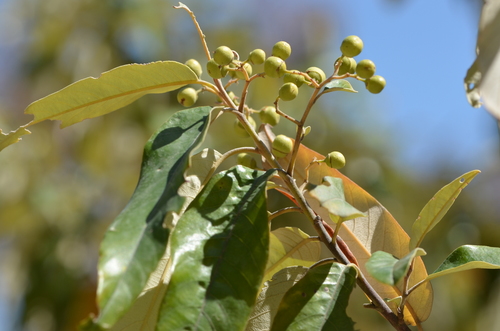
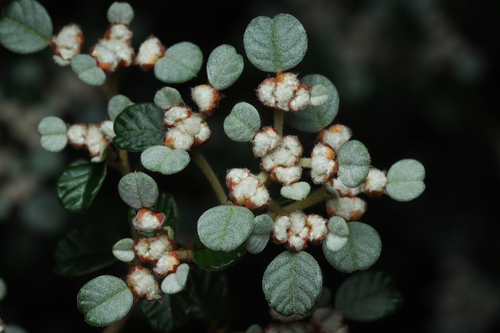
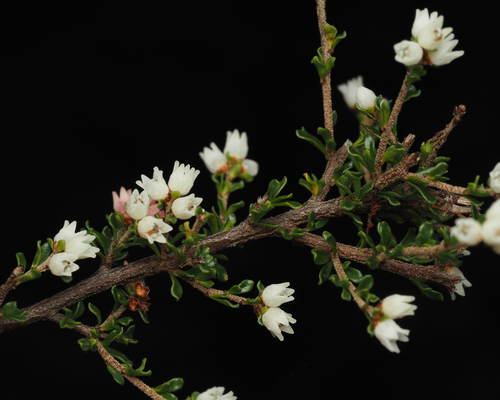
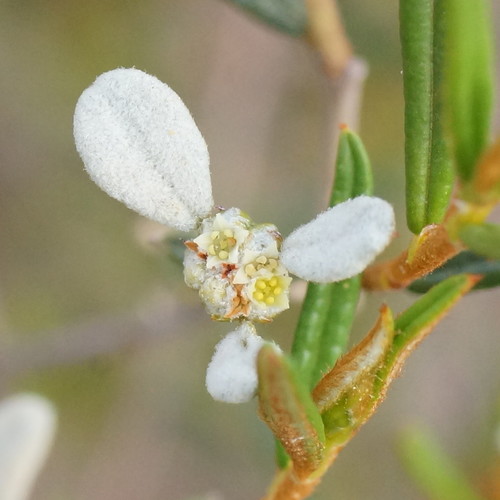
Rhamnaceae, commonly known as the buckthorn family, is a large family of flowering plants classified in the order Rosales. Most members of this family are trees or shrubs, and a smaller number are vines. The family contains approximately 55 genera and 950 species, with a worldwide distribution that is most concentrated in subtropical and tropical regions. The earliest known fossil evidence of Rhamnaceae dates to the Late Cretaceous; fossil flowers have been recovered from Upper Cretaceous deposits in Mexico and Paleocene deposits in Argentina. All Rhamnaceae have simple leaves, meaning their leaf blades are not divided into smaller leaflets. Leaves can grow in either alternate or opposite arrangements along stems. All members have stipules, which are modified into spines in many genera. This modification is particularly striking in species such as Paliurus spina-christi and Colletia paradoxa. The genus Colletia is also distinguished by having two axillary buds instead of one: one develops into a thorn, and the other develops into a shoot. Rhamnaceae flowers are radially symmetrical. They typically have 5 separate sepals, rarely 4, and 5 separate petals, sometimes 4 or no petals at all. Petal colors range from white, yellowish, greenish, pink to blue. In most genera, petals are small and not noticeable, but dense flower clusters in some genera such as Ceanothus are very conspicuous. The 4 or 5 stamens are positioned opposite the petals. Most Rhamnaceae have a superior ovary that holds 2 or 3 ovules, though some only have one ovule due to abortion. Fruits produced by this family are most commonly berries, fleshy drupes, or nuts. A small number of fruits are adapted for wind dispersal, while most are dispersed by mammals and birds. The Chinese jujube, the edible fruit of Ziziphus jujuba, is a major cultivated fruit in China. The North American genus Ceanothus includes multiple showy ornamental species, and hosts nitrogen-fixing nodules on its roots. The main economic uses of Rhamnaceae are as ornamental plants and as a source of many vibrant green and yellow dyes. Before modern propellants were developed, wood from Rhamnus species was the most preferred material for making charcoal used in gunpowder.