About Regina septemvittata (Say, 1825)
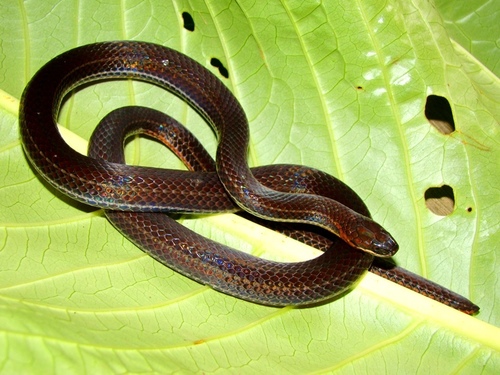
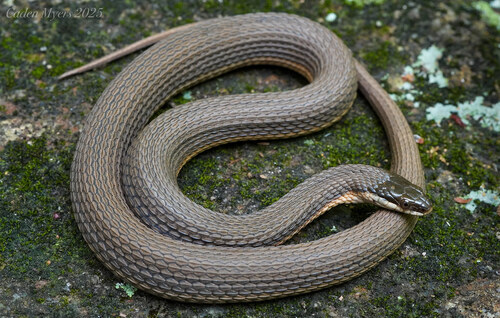
The queen snake, with the scientific name Regina septemvittata, is a nonvenomous semiaquatic snake species that belongs to the subfamily Natricinae of the family Colubridae. This species is endemic to North America. Its geographic range covers the temperate region of North America east of the Mississippi River, extending from western New York state west to Wisconsin, and south to Alabama and northern Florida. It can also be found in southwestern Ontario. The most significant cause of queen snake population decline is the loss of food sources caused by stream channelization, bank erosion, and water pollution. Queen snakes have very specific habitat requirements: they are never found in areas without clean running streams and watersheds with stony, rocky bottoms. During their active months, the water temperature must be at minimum 50 °F (10 °C), a requirement that is largely tied to their dietary needs. Queen snakes survive almost entirely on freshwater crayfish, and prey almost exclusively on newly-molted crayfish, which cannot effectively defend themselves with their pincers. One study found that crayfish make up over 90% of the species' diet. Less common food sources include frogs, tadpoles, newts, salamanders, minnows, snails, and fairy shrimp. Queen snakes locate prey not by sight or heat detection, but by smell; they use their tongue to carry prey scents to receptors inside their mouth, which lets them track their target even underwater. Female queen snakes reach full sexual maturity at three years of age, while males reach maturity at two years. Breeding occurs in spring and autumn. If mating happens in autumn, females can delay giving birth until spring, storing energy through their brumation period. Queen snakes are ovoviviparous: females give birth to live young after retaining eggs inside their body, which distinguishes this species from both oviparous (egg-laying) and fully viviparous snake species. Litter sizes range from 5 to 20. Each individual birth takes 1.5 to 2.5 minutes, and the interval between individual births ranges from 4 minutes to 1 hour, with an average interval of 11 minutes. Newly born queen snakes measure approximately 6 inches (15 cm) long and weigh 0.1 ounces (2.8 g). Newborns grow very quickly, and may shed their skin twice in their first week, surviving on stored yolk nutrients during this period. Baby queen snakes are able to swim and move immediately after birth, and must fend for themselves independently right after birth. Juvenile queen snakes measure between 6.9 and 9.1 inches (17.5 to 23 cm) in length.