About Ranunculus abortivus L.
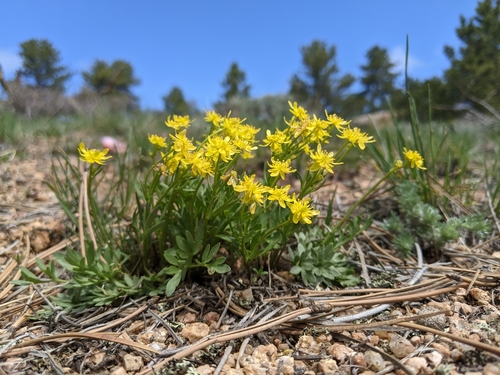
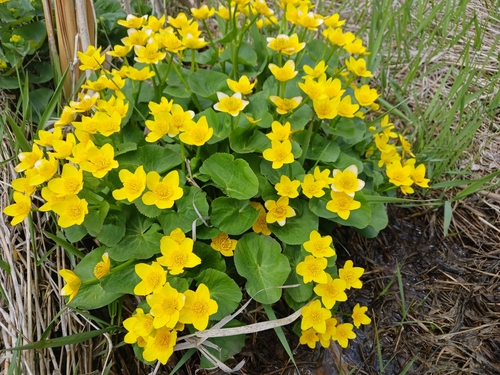
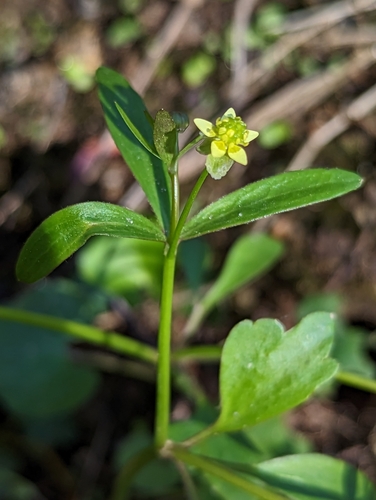
Ranunculus abortivus L. produces hairless erect stems that reach 10 to 60 cm (4 to 24 inches) in height. Its leaves vary in shape, with all plant parts being hairless. The persistent basal leaves are kidney-shaped to circular with scalloped margins, while the stem leaves are arranged alternately and are deeply lobed or divided. Lower stem leaves have long petioles (leaf stalks), while upper stem leaves have shorter petioles or are stemless, with narrow blades or lobes. Each stem can produce up to 50 flowers. Each flower has five petals 1.5 to 3.5 mm (1⁄16 to 1⁄8 inch) long, with a ring of stamens surrounding a rounded cluster of green carpels. The carpels mature into brown, shiny, rounded, slightly flattened achenes that have a tiny beak. This species grows in rich, moist woods and alluvial areas. In ecological terms, the flowers produce both nectar and pollen, which are eaten or collected by small bees, ladybugs, hoverflies, and other types of flies. The seeds and leaves are an occasional food source for animals; small rodents including the eastern chipmunk and meadow vole eat the seeds. Like other buttercups, the leaves contain a blistering agent and are mildly toxic, but cottontail rabbits still eat them. Both the leaves and seeds are eaten by turkeys. Native American groups used this plant for a range of purposes. The Cherokee cooked and ate the leaves, and also used it medicinally to treat abscesses and sore throats, and as a sedative. The Iroquois used it to treat snakebite, poisoning, smallpox, and toothache.