About Ramphocelus passerinii Bonaparte, 1831
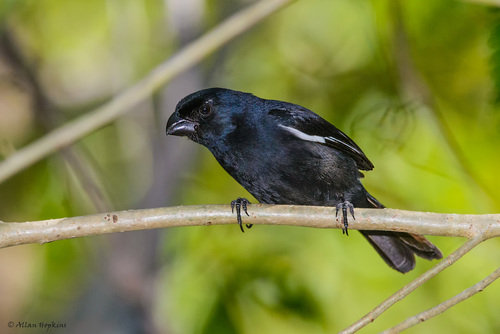
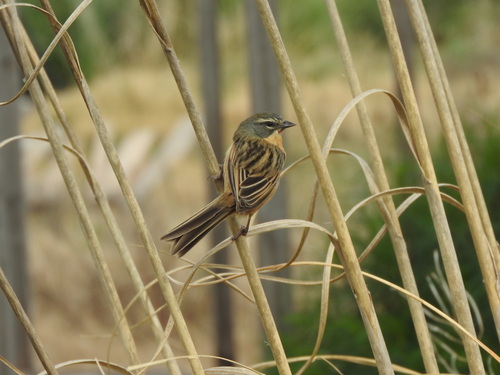
The adult Scarlet-rumped tanager (Ramphocelus passerinii Bonaparte, 1831), also called Passerini's tanager, is 16 cm long and weighs 31 g. Adult males are mostly black, with the exception of a scarlet rump, silvery bill, and dark red iris. Females have a grey head, olive upperparts that become brighter and paler on the rump, brownish wings and tail, and ochre underparts. Female plumage differs more from that of Cherrie's tanager than any other plumage of this species. Immature individuals have an orange tint on their underparts and rump, and resemble a paler, duller female Cherrie's tanager. The call of Passerini's tanager is a sharp wac. Its song is made up of a few clear, pleasant notes, delivered in shorter phrases than the song of its Pacific relative. This species is very common from sea level to 1200 m in altitude, and occurs occasionally as high as 1700 m. Its preferred habitat is semi-open areas, including light second growth, woodland edges, gardens, and pasture with bushes. Passerini's tanagers can be found in pairs, small groups, or as part of a mixed-species feeding flock. Up to a dozen of these birds may roost together in dense thickets at night. This species feeds on certain small fruit (usually swallowed whole), insects, and spiders. It builds a cup nest up to 6 m high in a tree. A normal clutch holds two pale blue or grey eggs, marked with black, brown, or lilac. This species will sometimes raise two broods in a single breeding season.