About Ramalina fraxinea (L.) Ach.
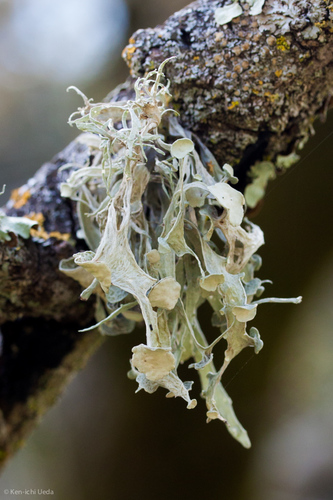
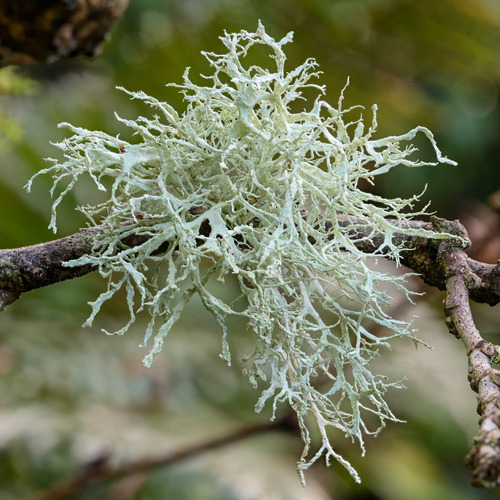
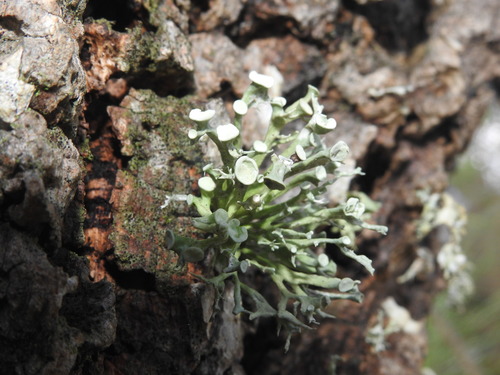
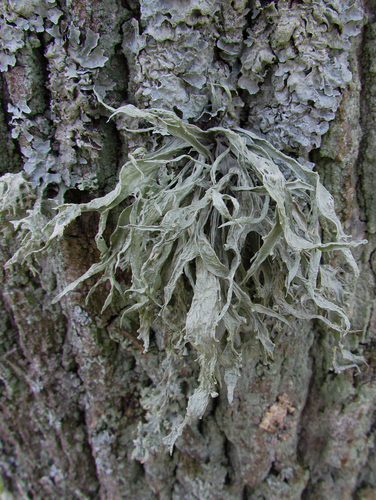
Ramalina fraxinea, commonly called the cartilage lichen, is a fruticose lichen with erect or pendulous thalli and flattened branches. Its colour ranges from pale green, through yellow-grey, to white-grey; it frequently produces apothecia, and soralia may also be present. This lichen grows on tree bark and is widespread across the United Kingdom. In north-eastern England and eastern Scotland, it often grows to be well developed, reaching up to 12 cm in size, with individual thongs up to 2 cm wide. It grows much smaller in less favourable habitats. The species has declined sharply since the mid-20th century, and is now rare or absent across many areas of the UK. Its sensitivity to air pollution and fertilizer enrichment may be the cause of this decline. It occurs mainly on the bark of Acer, Fraxinus, Populus, Tilia, and Ulmus, and has also been recorded growing on Rhododendron and oak. Confirmed records of the species exist from the Netherlands, Spain, Belgium, Luxembourg, France, England, Scotland, Hungary, Norway, Latvia, and the United States of America. Ramalina fraxinea prefers windy, exposed, well-lit sites, and grows on trees with nutrient-rich bark. It also favours humid or foggy areas located near ponds or rivers. Its spores are kidney-shaped. It produces fewer apothecia than the related species Ramalina fastigiata. The large specimens featured in the associated photographs have very few apothecia, the spore-producing discs. Any apothecia present grow on short stalks, located on the surface of the lobes, particularly near lobe edges. Historically, Ramalina lichens were dried and ground down to make white hair powder, and were also used as a treatment for chilblains. They were additionally used in perfume production. In Sweden, other parts of northern Europe, and northern Russia, Ramalina fraxinea was used to make brandy. This brandy-making process was most commonly done with Cladina rangiferina, but several other lichen species including R. fraxinea were also used for the purpose.