About Rallus caerulescens Gmelin, 1789
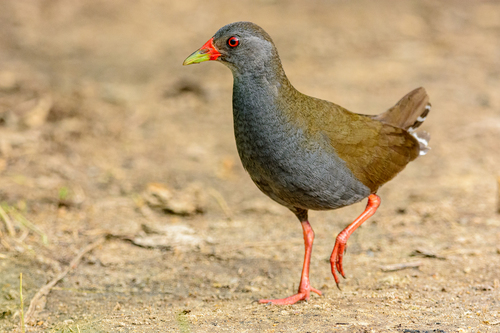
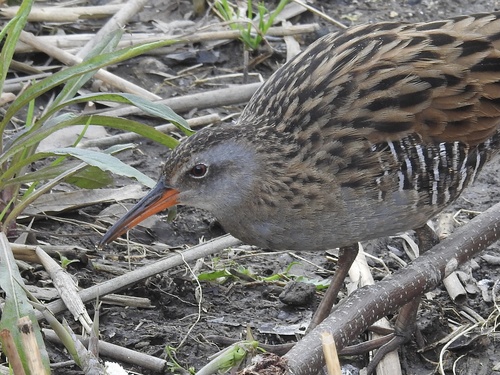
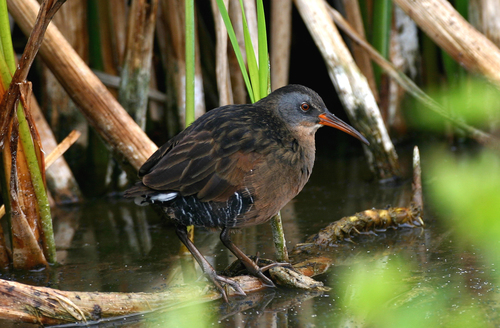
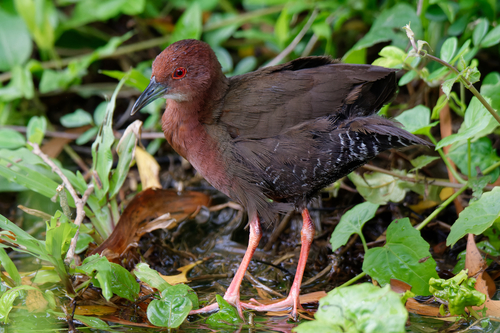
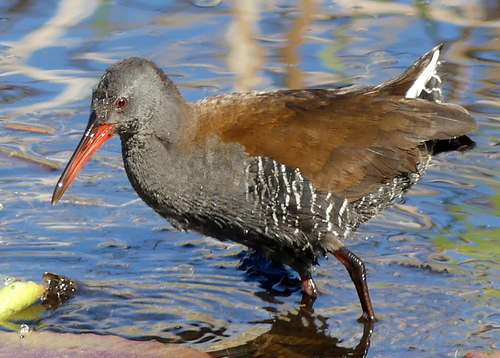
Adults of Rallus caerulescens Gmelin, 1789 measure 27–28 cm (11 inches) in length. They have mostly brown upperparts and blue-grey underparts, with black-and-white barring on the flanks and undertail. The plumage of males and females is similar, but females are smaller in size. This is the only species in the Rallus genus that has a plain back. The body is flattened laterally, which lets the bird move more easily through reeds. They have long toes, a short tail, and a long, slim, dull red bill. Their legs are red. Immature birds look similar to adults, but their blue-grey plumage is replaced by buff. Rallus caerulescens are noisy birds, with a trilled whistled call that sounds like treee-tee-tee-tee-tee. Their breeding habitat is marshes and reedbeds across eastern and southern Africa, ranging from Ethiopia to South Africa. Most individuals are permanent residents, but some move seasonally in response to wetland availability. For feeding, these birds probe with their bill in mud or shallow water, and also pick up food by sight. They mainly eat insects, crabs, and other small aquatic animals.