About Rabidosa rabida (Walckenaer, 1837)
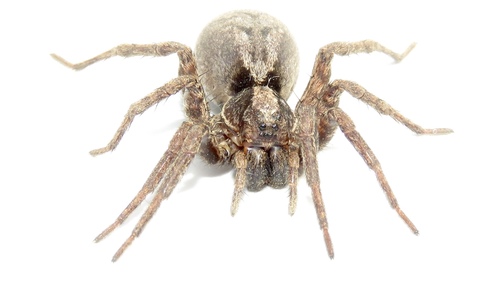
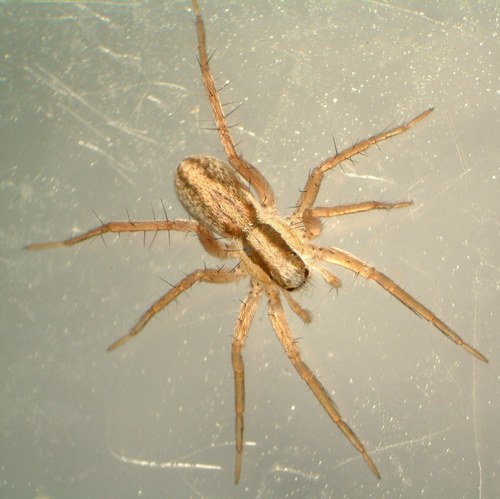
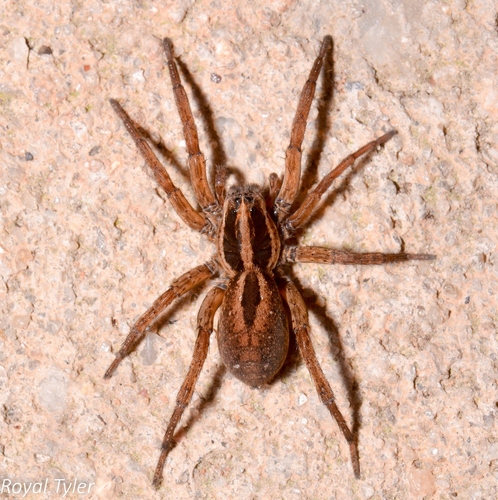
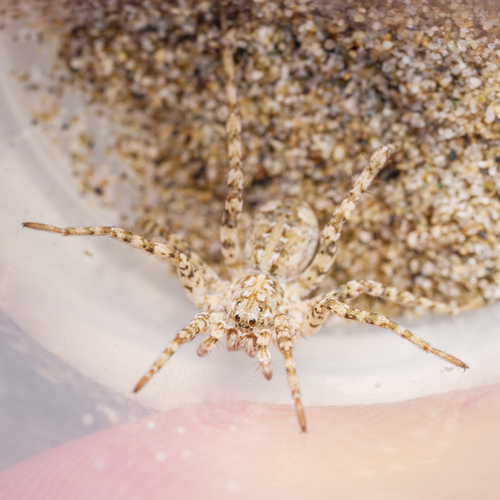
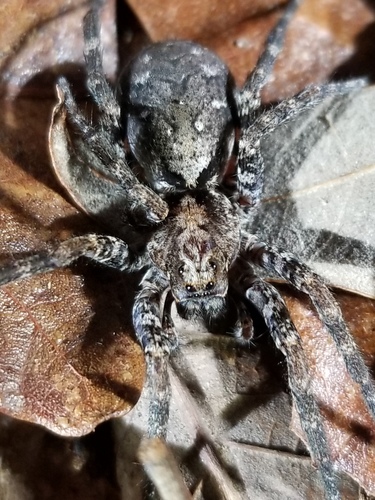
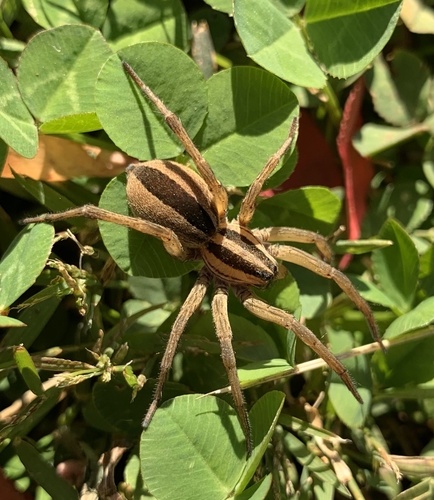
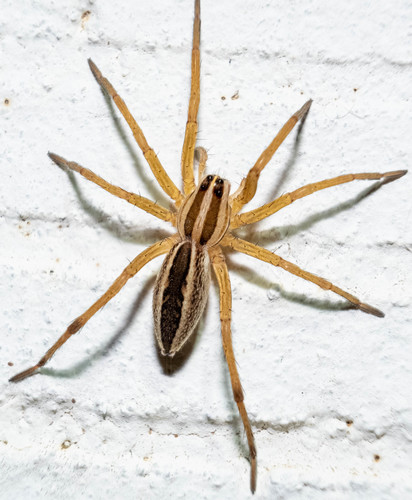
Rabidosa rabida, commonly called the rabid wolf spider, can be identified by its distinct body markings. Its cephalothorax has two dark stripes, its abdomen has one dark stripe of the same shade, and all other body parts are yellow. Females are larger than males, reaching roughly 1 inch in body length, while males average around half an inch long. This species has eight eyes arranged in two rows: four in the upper row and four in the lower row, with the lower four resembling a spider's moustache. B. J. Kaston distinguished R. rabida from the related species R. punctulata by the coloration of the male's legs: male R. rabida have mostly black front legs, while male R. punctulata have all legs of the same color. The common name "rabid wolf spider" is thought to come from this species' erratic, rapid movement. It is important to note that spiders cannot contract rabies, so this species cannot transmit rabies to humans or other animals. Rabidosa rabida favors habitats including cotton fields and wooded areas. Most individuals live in various types of holes and debris, and they can sometimes be found near ponds or in deep burrows covered by debris. This species does not build webs to catch prey. Instead, it uses silk to wrap captured prey or protect its young. It hunts at night, either ambushing prey or chasing it down, and sometimes camouflages itself against bark or leaves to help catch prey. During breeding season, males perform a courtship dance in front of females and produce sound by moving their legs. After successful mating, the female lays eggs and constructs a silk egg sac, which she uses to carry her developing young. Once the spiderlings hatch, they ride on their mother's back until they are mature enough to survive independently. Rabid wolf spiders may bite if provoked, but their bite is not dangerous to humans. This species is native to North America. In the United States, it occurs from Maine south to Florida in the eastern part of the country, and west as far as Oklahoma and Texas.