About Quercus variabilis Blume
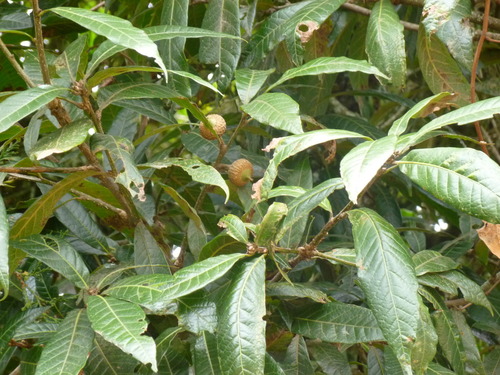
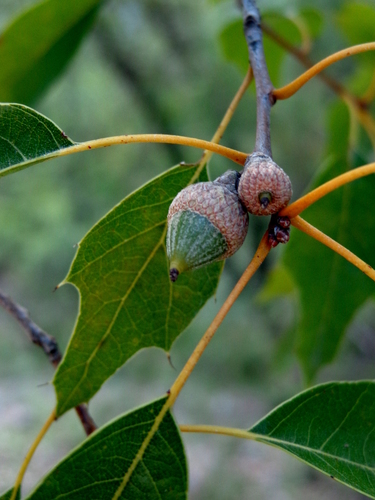
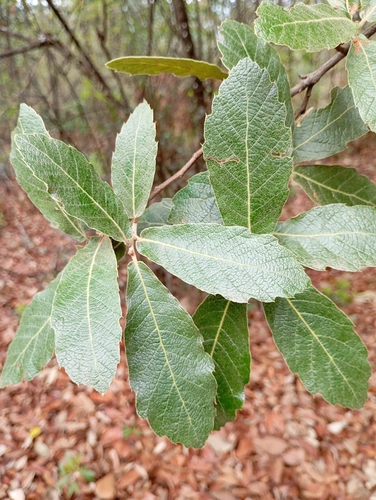
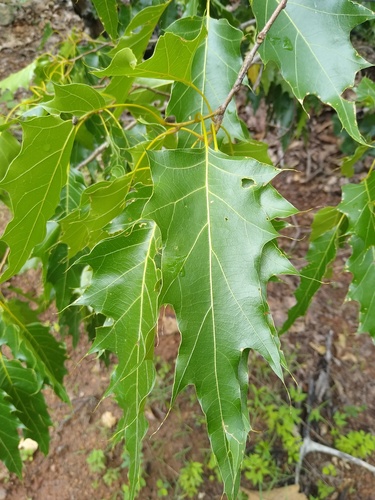
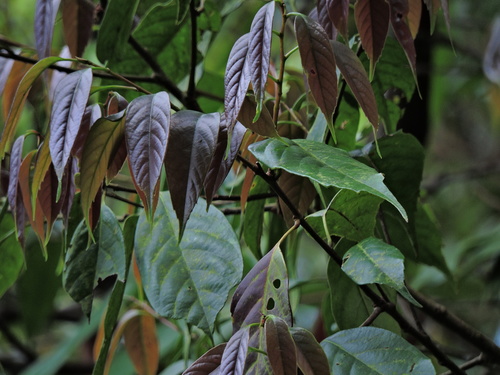
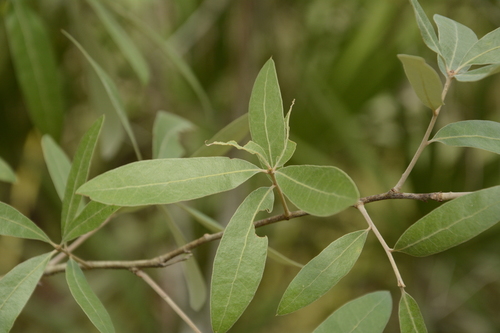
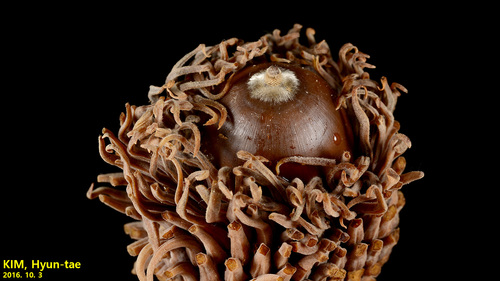
Quercus variabilis Blume is a medium-sized to large deciduous tree that reaches 25–30 metres (82–98 feet) in height. It has a fairly open crown, and thick corky bark marked by deep fissures and sinuous ridges. Its leaves are simple, acuminate, and variable in size: 8–20 centimetres (3+1⁄4–7+3⁄4 inches) long and 2–8 cm (3⁄4–3+1⁄4 in) wide. Leaves have a serrated margin, where each vein ends in a distinctive fine hair-like tooth; the upper leaf surface is green, while the lower surface is silvery and covered in dense short pubescence. Quercus variabilis produces wind-pollinated catkin flowers in mid-spring. Fruits mature roughly 18 months after pollination; the fruit is a globose acorn, 1.5–2 cm (5⁄8–3⁄4 in) in diameter. Two-thirds of the acorn is enclosed in an acorn cup, which is densely covered in soft 4–8 millimetres (3⁄16–5⁄16 in) long 'mossy' bristles. This species grows in evergreen and deciduous forests at elevations below 3,000 m (9,800 ft). Its native range covers 21 Chinese provinces (Anhui, Fujian, Gansu, Guangdong, Guangxi, Guizhou, Hebei, Henan, Hubei, Hunan, Jiangsu, Jiangxi, Liaoning, Shaanxi, Shandong, Shanxi, Sichuan, Taiwan, Yunnan, Zhejiang), as well as Japan and Korea. In China, Quercus variabilis is cultivated on a small scale for cork production, though its yield is lower than that of the related cork oak. It is also occasionally planted as an ornamental tree. Dead wood logs of this species are used for pharmaceutical-grade production of Ganoderma lucidum, which is called 'the mushroom of immortality' in China.