About Quercus turbinella Greene
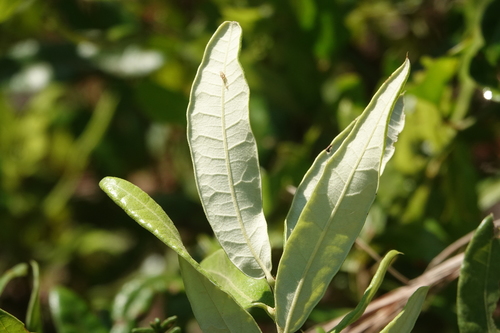
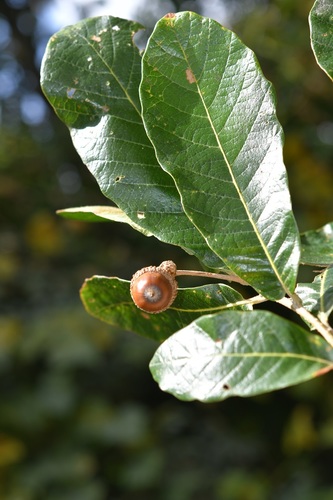
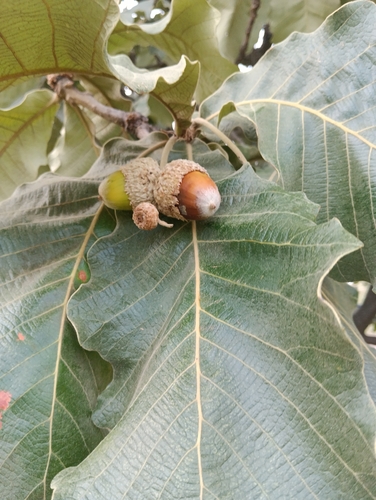
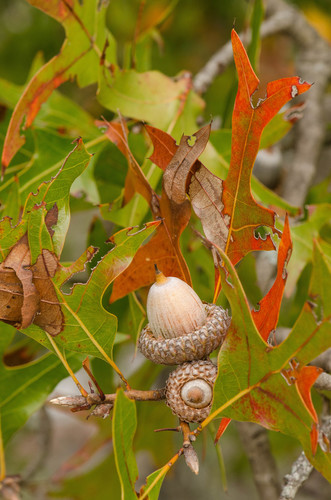
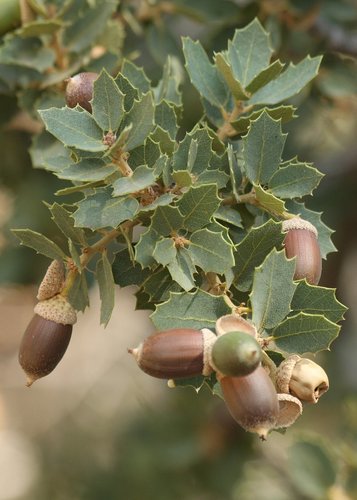
Quercus turbinella Greene is most often a shrub 2 to 5 meters (6+1⁄2 to 16+1⁄2 feet) tall, but it can occasionally grow into a tree that exceeds 6 meters (20 feet) in height. Its mature branches are gray or brown. Young twigs are often covered in short, woolly fibers, becoming scaly as they age. This species produces thick, leathery evergreen leaves that grow up to 3 centimeters (1+1⁄4 inches) long and 2 centimeters (3⁄4 inch) wide, edged with large, spine-tipped teeth. The upper leaf surfaces are gray-green to yellowish with a waxy texture; lower leaf surfaces are yellowish, either hairy or woolly, and glandular. Male catkins are yellowish-green, while female flowers grow in short spikes in leaf axils; both appear at the same time as new leaf growth. The fruit is a yellowish brown acorn up to 2 centimeters long, paired with a shallow, warty cup around 1 centimeter wide. When enough moisture is available, this oak reproduces sexually through acorns, but it most often reproduces vegetatively by sprouting from its rhizome and root crown. This species has been documented growing in Arizona, New Mexico, Colorado, Utah, Nevada, southern California, western Texas, and Baja California. In California, it occurs in the New York Mountains and a small number of eastern California desert mountain ranges. Populations that previously were classified as this species in the desert mountains of the western Mojave Desert and inner coastal ranges are now recognized as Quercus john-tuckeri. It can grow in woodland, chaparral, forest, and other habitat types. It is most common in chaparral habitat across central Arizona, through the transition zone of the Mogollon Rim–White Mountains, and also occurs in southeastern Arizona in the Madrean Sky Island mountain ranges. Quercus turbinella readily hybridizes with other oak species, including Quercus gambelii, Q. havardii, Q. arizonica, and Q. grisea. Many animal species rely on it for resources: wild and domestic ungulates browse its foliage, and many birds and mammals consume its acorns. Animals also use the shrub for cover, and mountain lions store their kills within its thickets.