About Quercus texana Buckley
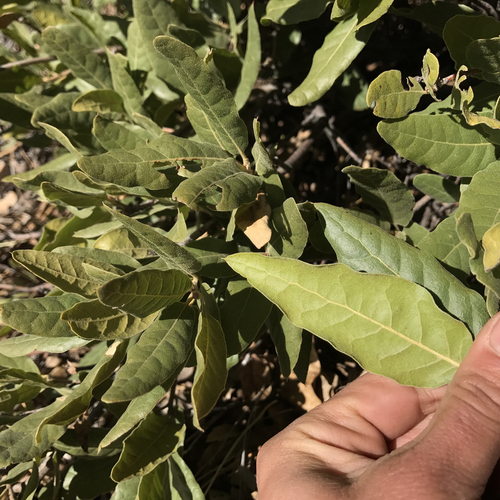
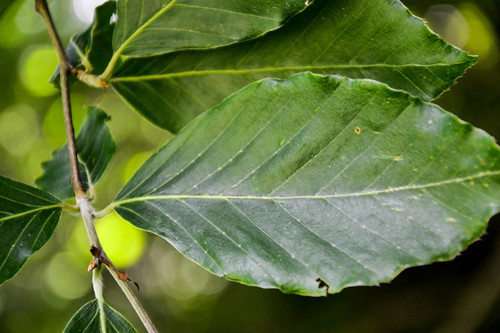
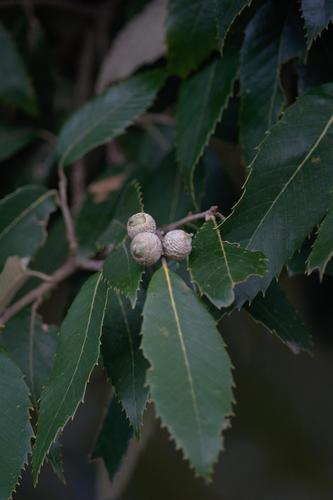
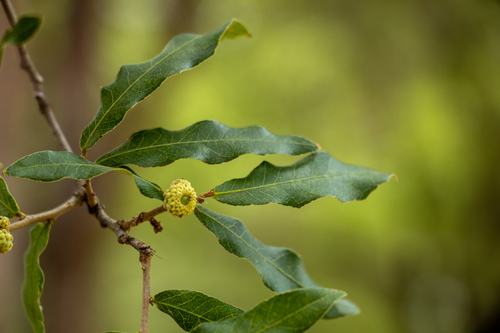
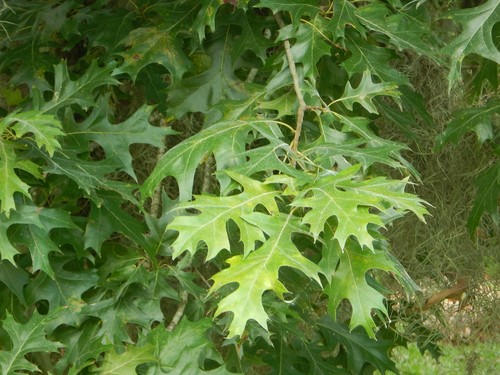
Quercus texana Buckley, commonly known as Nuttall's oak, is a large, fast-growing deciduous oak tree. It can reach up to 85 feet (25 meters) in height, and has dark brown bark. Its leaves have sharp pointed lobes, a shape somewhat similar to the leaves of Georgia oak (Quercus georgiana) and pin oak (Quercus palustris). It grows quickly, and typically develops an attractive red leaf color in autumn, doing so much more reliably than pin oak. This species was incorrectly named Quercus nuttallii for many years, and is now classified as Q. texana; this taxonomic change has caused significant confusion with the Texas red oak, which was previously called Q. texana and is now known as Q. buckleyi. Nuttall's oak is native to the south-central United States, found primarily in the lower Mississippi River Valley in Louisiana, Arkansas, Mississippi, Alabama, and western Tennessee. Additional populations occur in eastern Texas, southeastern Oklahoma, southeastern Missouri, far western Kentucky, and the southernmost tip of Illinois. It remains relatively uncommon in the horticultural industry, but is slowly gaining popularity because of its fast growth rate, ease of transplanting, attractive fall foliage, and tolerance for growing in wet soils. This species is known for its ability to rapidly restore its gas exchange function after flooding events. The current world record Nuttall's oak is located at White River National Wildlife Refuge in Desha County, Arkansas. Per the National Forests Champion Trees Official Register, this specimen has a trunk circumference of 274 inches, a height of 100 feet, and a crown spread of 102 feet.