About Quercus palustris Münchh.
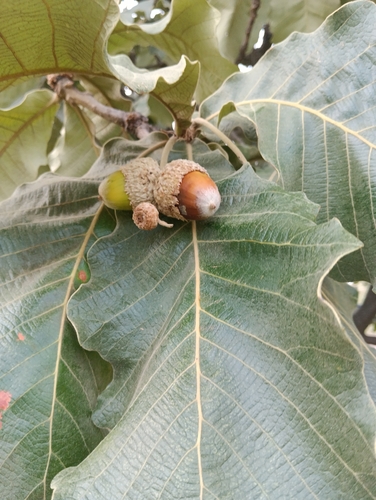
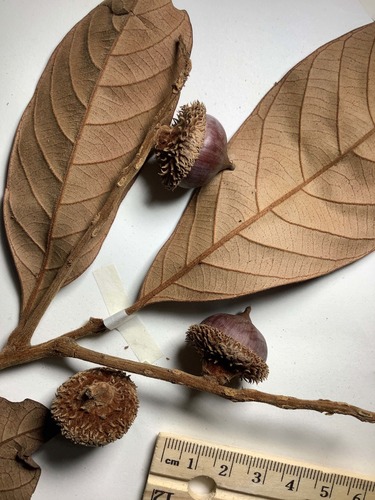
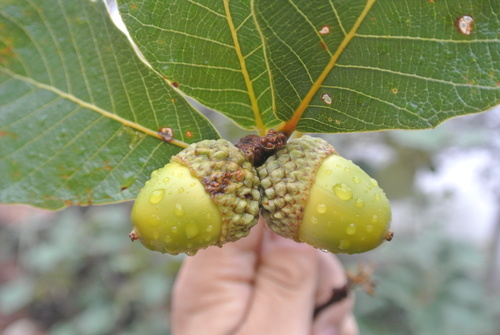
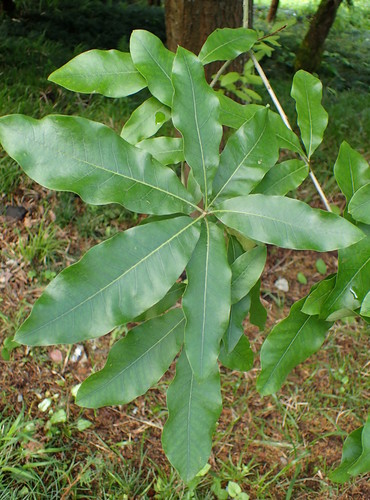
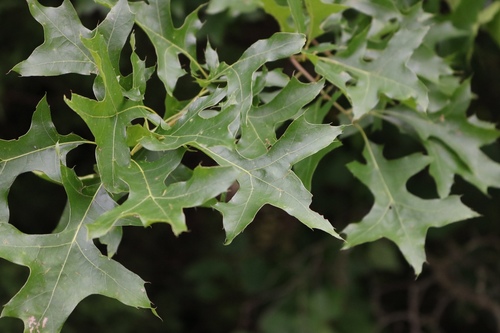
Quercus palustris Münchh., commonly called pin oak, is a medium-sized deciduous tree. It typically reaches 18–22 metres (59–72 feet) in height, with a trunk up to 1 m (3+1⁄2 ft) in diameter, and a canopy spread of 8–14 m (26–46 ft). A 10-year-old tree grown in full sun reaches about 8 m (26 ft) tall. Young pin oaks have a straight, columnar trunk with smooth bark and a pyramidal canopy. By 40 years of age, the tree develops rougher bark and a loose, spreading canopy. This canopy arrangement is one of the species' most distinctive features: upper branches point upward, middle branches grow at right angles to the trunk, and lower branches droop downward. The leaves of pin oak are 5–16 centimetres (2–6+1⁄4 inches) long and 5–12 cm (2–4+3⁄4 in) broad, lobed with five or seven lobes total. Each lobe has five to seven bristle-tipped teeth, and the sinuses (indentations between lobes) are typically U-shaped and extremely deeply cut, with roughly as much area taken up by sinuses as by leaf tissue. Leaves are mostly hairless, except for a characteristic tuft of pale orange-brown down on the lower leaf surface where each lobe vein connects to the central vein. Overall autumn leaf color is generally bronze, though individual leaves may be red for a time, and the autumn coloration is not considered particularly distinctive. The species produces acorns that sit in a shallow, thin cap; the acorns are hemispherical, 10–16 millimetres (13⁄32–5⁄8 in) long and 9–15 mm (11⁄32–19⁄32 in) broad. They start out green and mature to pale brown roughly 18 months after pollination. The acorn kernel is very bitter, so the acorn is unpalatable unless processed using traditional methods. In its natural environment, pin oak is a relatively short-lived fast-growing pioneer or riparian species, with an average lifespan of approximately 120 years, compared to many other oak species that live for several centuries. Despite this average lifespan, many individual pin oaks exceed 120 years of age. Unlike many oaks, which develop a strong deep taproot when young, pin oak grows a shallow, fibrous root system. Like a small number of other oak species, and some species of beech and hornbeam, juvenile pin oak trees exhibit marcescence, meaning they retain dead leaves through the winter. Young trees under 6 m (20 ft) tall often hold dead leaves year-round, with leaves remaining attached to shoots until new leaves emerge in spring. As with many other oak species, dead branches on pin oaks stay attached to the tree for many years. Pin oak is primarily native to eastern and central United States, ranging northeast to Connecticut, west to eastern Oklahoma and Kansas, and south to Georgia. It is also native to extreme southern Ontario, Canada. It has been introduced to England and Australia, where it is well-adapted and widespread across Australia, especially in the cooler southern states of Victoria and New South Wales. It is also well-adapted to regions of South Africa and Argentina, particularly Argentina's Río de la Plata region. Naturally, pin oak is a wetland tree restricted to acidic soils. It cannot tolerate limestone or the sandy soils of Florida, and grows at low altitudes from sea level up to 350 m (1,148 ft). It grows primarily on level or nearly level, poorly drained, alluvial floodplain and river-bottom soils with high clay content. Natural populations are usually found on sites that flood intermittently during the dormant season, but do not ordinarily flood during the growing season. It does not grow on the lowest, most poorly drained sites that may hold standing water through much of the growing season. It does, however, grow extensively on poorly drained upland "pin oak flats" on the glacial till plains of southwestern Ohio, southern Illinois and Indiana, and northern Missouri, where level topography and a claypan soil layer leave sites excessively wet in winter and spring. Within its native range, pin oak is one of the two most commonly used landscaping oaks, alongside northern red oak, due to its ease of transplant, relatively fast growth, and tolerance of pollution. Because the species is naturally adapted to moist, acidic soils, it may develop a condition called iron chlorosis when planted on less suitable sites, causing leaf drop during the growing season and top-down rot. Mature pin oaks are often too large to treat this condition, and this nutrient deficiency caused by alkaline soil can eventually kill the tree. The species' drooping lower branches can also create issues, interfering with access for traffic and pedestrians. Pin oak is also cultivated in parks and large gardens in the United Kingdom, and has earned the Royal Horticultural Society's Award of Garden Merit. Its wood is generally sold as red oak, but is of significantly inferior quality, being somewhat weaker and often marked by many small knots. The wood is hard and heavy, and is used for general construction and as firewood. Some Native American tribes used pin oak bark to make a drink to treat intestinal pain.