About Quercus michauxii Nutt.
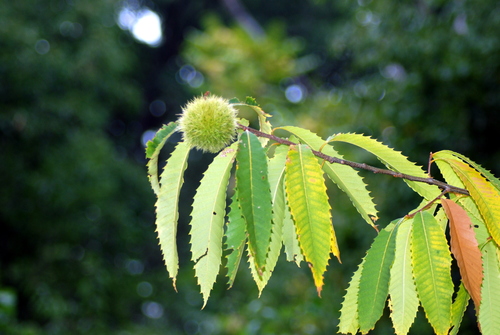
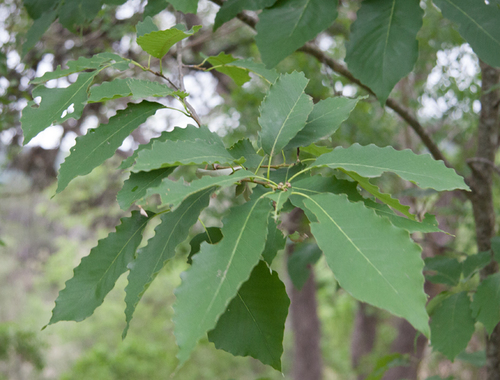
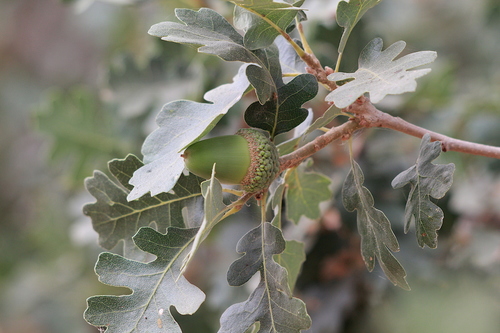
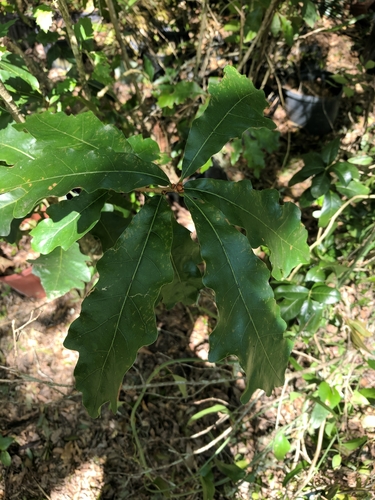
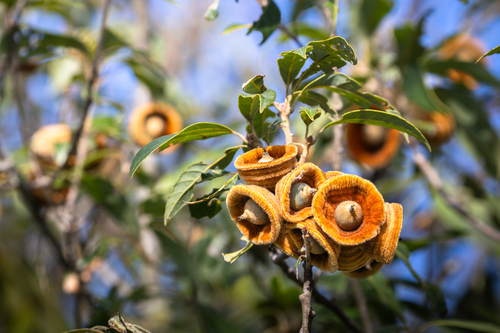
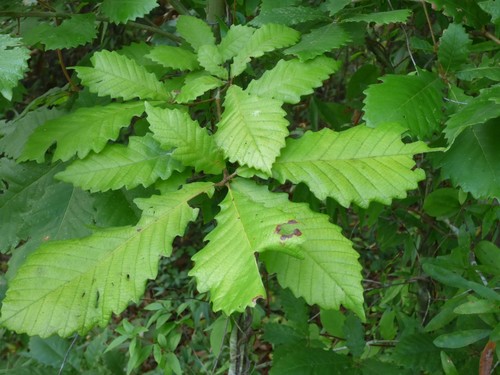
Quercus michauxii Nutt., commonly known as swamp chestnut oak, has simple non-compound leaves that measure 4–11 inches (10–28 cm) long and 2–7 inches (5–18 cm) wide. Each leaf side bears 15–20 lobe-like, rounded simple teeth. Its leaves are similar to those of chestnut oak and chinkapin oak (Quercus muehlenbergii), but swamp chestnut oak leaves generally do not develop the more slender form that leaves of these other species can sometimes have. The leaves of this oak turn red in autumn. Its fruit is an acorn, 2.5–3.5 cm (1–1+1⁄2 inches) long and 2–2.5 cm (3⁄4–1 inch) broad, carried on a 2–3 cm peduncle. Acorns mature in the fall around six months after pollination, and the tree only produces heavy acorn crops every several years. In its ecology, the acorns of swamp chestnut oak are eaten by generalist species including chipmunks, squirrels, white-tail deer, wild hogs, and black bears. Cattle also readily eat these acorns, which is why the species is sometimes called "cow oak". The wood of swamp chestnut oak is similar to the wood of other white oaks, and is usually marketed mixed in with other white oak wood. It is also called basket oak because its wood can be easily split into long, thin, flexible strips that work very well for basket weaving. The acorns of this species are large, relatively sweet, and edible. Swamp chestnut oak is sometimes cultivated as a large tree for gardens or streets, and grows quite easily when not exposed to extreme urban conditions. The current National Champion Swamp Chestnut Oak grows in the Stumpy Lake area of Virginia Beach, Virginia. It stands 123 ft (37 m) tall, has a crown spread of 109 ft (33 m), and a trunk circumference of 23 ft (7 m).