About Quercus leucotrichophora A.Camus
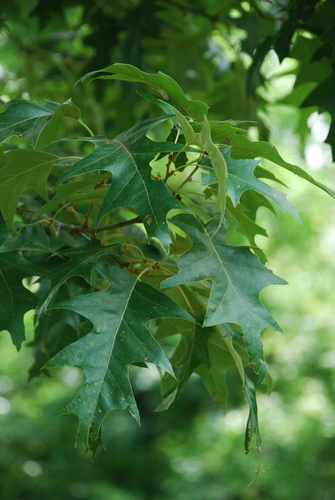
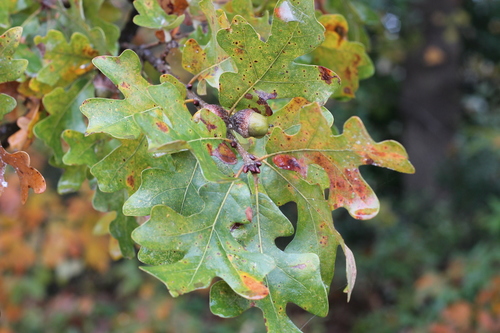
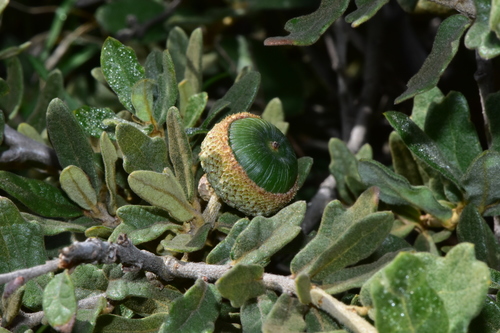
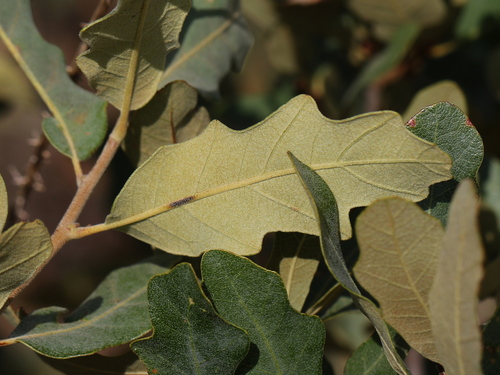
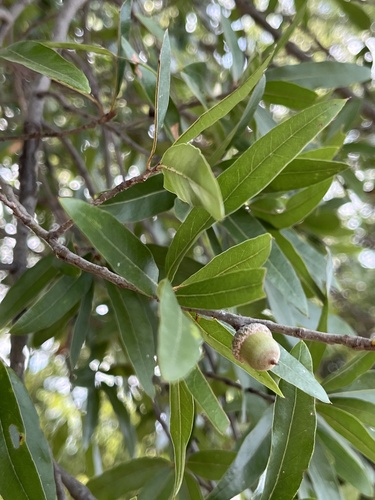
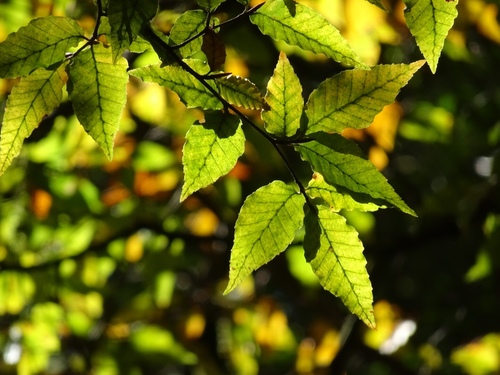
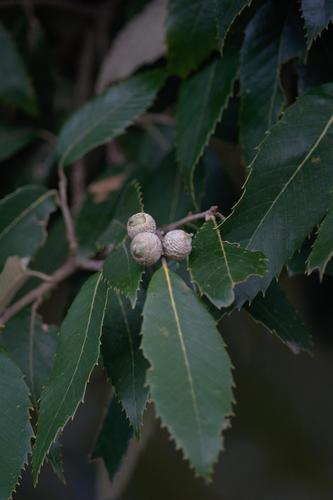
Quercus leucotrichophora is an evergreen oak tree. Its leaves are stalked, ranging from ovate to lanceolate in shape, with acuminate tips and serrated margins. They are leathery and dark green, hairless on the upper surface, and densely covered in white or gray soft hairs underneath. Male flowers grow as slender, drooping spikes, while female spikes are sessile and grow from leaf axils. The tree produces a single solitary acorn per infructescence. It flowers from April to May, and its fruits ripen in December. It naturally regenerates through seeds. This species is distributed across Northern India, Nepal, Myanmar, Pakistan, and Sri Lanka. In Nepal, it occurs naturally at elevations between 1,500 and 2,700 metres (4,900 to 8,900 feet) in forested areas, where it typically grows in association with Rhododendron arboreum, Lyonia ovalifolia, and Myrica esculenta. On south-facing slopes and in disturbed areas, it grows in association with Pinus roxburghii, also known as chir pine. The fungus Lactarius abbotanus forms ectomycorrhizal associations with the roots of this tree. Its branches are covered in a wide variety of mosses, lichens, epiphytes, parasitic creepers, and other organisms, which create microhabitats for many different animals. The tree often develops many types of leaf galls, induced by a range of insect species. Multiple genera within the Cecidomyiidae family—including Asphondylia, Lasioptera, and Dasineura—are known to cause galls on this tree. An unknown species of Itonididae, a family of cecidomyiids, causes pouch-shaped leaf galls on Quercus leucotrichophora. Common called Banj oak, this species is counted among the most useful trees native to the Himalayas. It is very commonly lopped, or branch-pruned, for fuelwood, because its wood has a high calorific value and good burning characteristics. Its leaves are widely used as cattle fodder. Its leaf litter is high in nitrogen, and makes an excellent compost fertilizer. While the timber is hard and strong, and used to make agricultural implements, it is not considered particularly valuable because it is difficult to work with.