About Quercus laevis Walter
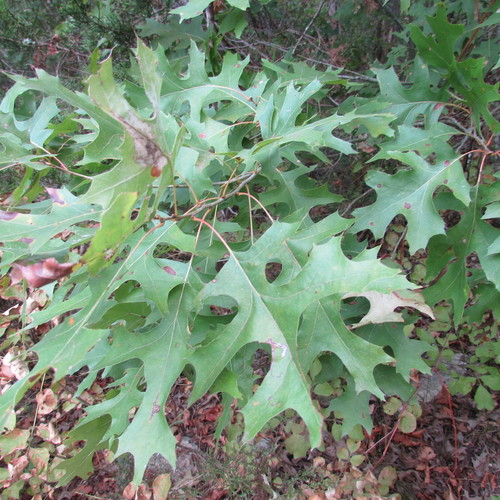
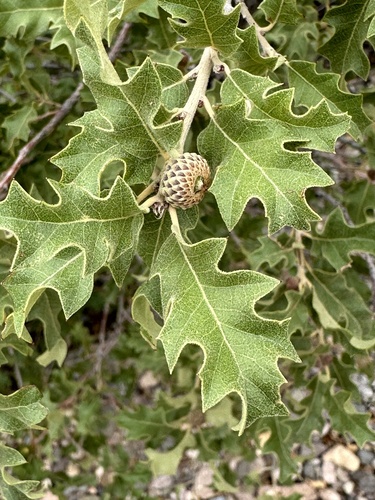
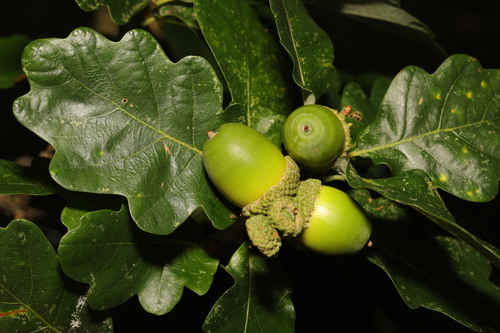
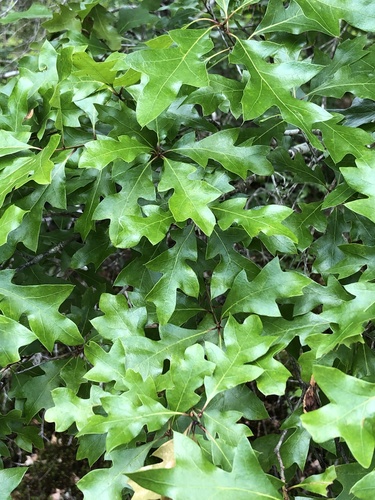
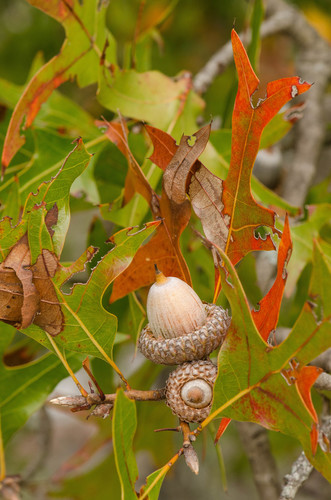
Quercus laevis is most often a small tree, and sometimes takes a shrubby form. It typically reaches only 8–10 meters (26–33 feet) in height, though it can occasionally grow as tall as 28 m (92 ft). Its leaves vary in size: most are 10–17 centimeters (4–6+3⁄4 inches) long, but some are as short as 8 cm (3+1⁄4 in) or as long as 30 cm (12 in). Leaves have 3–7 slender lobes, with deep indentations between the lobes, and each lobe ends in 1–3 bristle teeth. The foliage turns red in autumn. Its acorns measure about 20–25 millimeters (3⁄4–1 in) long; like acorns of other red oaks, they take 18 months to mature. This species, commonly called turkey oak, grows on the coastal plain ranging from Virginia south to southwestern Florida, and west to southeast Louisiana, where it grows alongside many tropical trees including mature coconut palms and large Cuban Laurel (Ficus) trees. It typically grows in poor, thin, dry, rocky or sandy soils that can support very few oaks besides blackjack oak (Q. marilandica). While it does not develop the attractive crown shape seen in many other oak species, it is still a valuable tree for planting on infertile, dry, sandy sites. Its deeply lobed leaves are also attractive. In the sandy knolls of the southeastern United States, it grows as an understory tree in association with longleaf pine and other pine stands.