About Quercus incana W.Bartram
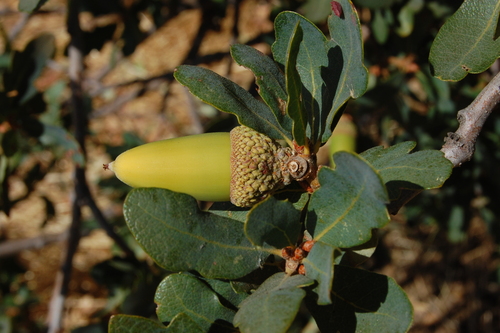
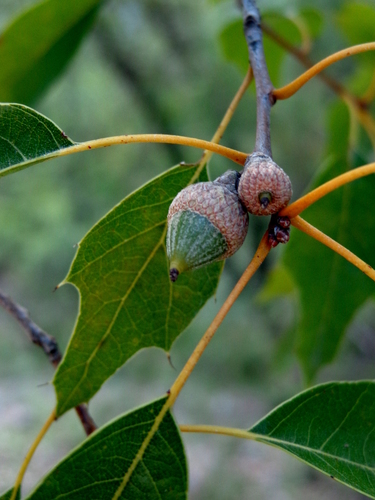
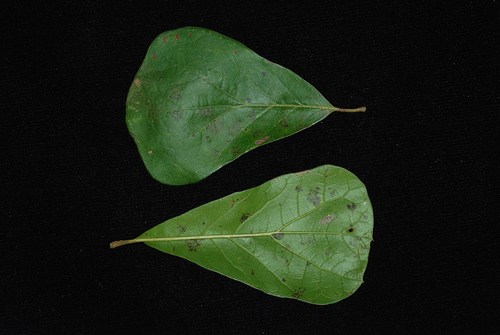
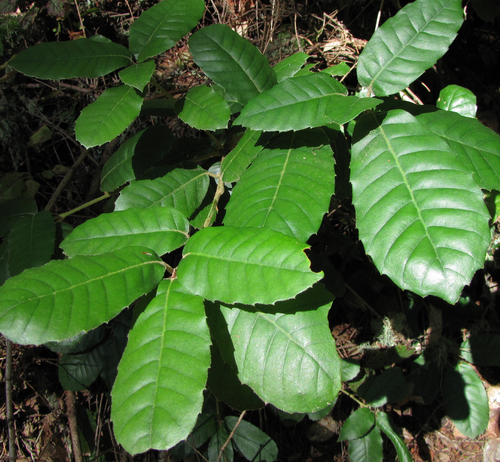
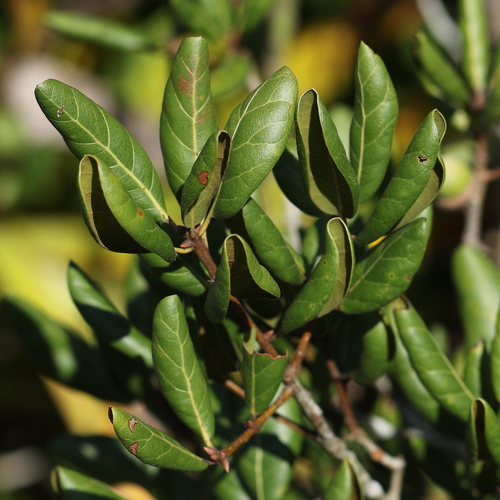
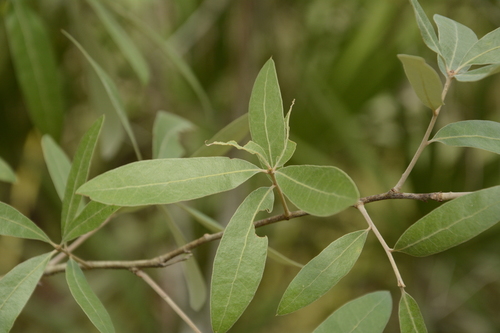
Quercus incana W.Bartram, commonly called bluejack oak, is a tree that typically reaches around 10 meters (33 feet) in height, with a maximum recorded height of roughly 15 meters (49 feet). The "national champion bluejack" was a Texas specimen measuring 15.5 m (51 ft) tall, 2.1 m (7 ft) in trunk circumference, with a crown spread of 17 m (56 ft). This species has a short trunk, with crooked branches that form an open, irregular crown. Its bark is platy, and ranges in color from dark brown to black. The leaves are generally oval in shape, growing up to 10 centimeters long and 3.5 cm wide. They are glossy green on the upper surface, and woolly-haired and bluish on the underside; the common name "bluejack" comes from this bluish, ashy leaf appearance. Its acorn grows up to 1.7 cm long and 1.6 cm wide, not including the acorn cap. Quercus incana reproduces both by seed and by resprouting from the rootcrown after its above-ground parts are removed. It can also form thickets by spreading underground runners. In terms of ecology, Quercus incana often grows in longleaf pine (Pinus palustris) ecosystems, where it grows in the understory alongside turkey oak (Quercus laevis) and wiregrass (Aristida stricta). In the Big Thicket region of Texas, it codominates with post oak (Quercus stellata) and multiple pine species. This oak is found on sandy soils, and typically grows on slopes below ridgetops, where soils are finer and less dry than the ridge tops. It is well adapted to wildfire, and grows in habitats where fire is common and ecologically required, such as longleaf pine ecosystems. The species cannot tolerate dense shade, and relies on fire to remove taller, more robust oaks that would otherwise outcompete it. Its acorns are a food source for many animal species, including the Sherman's fox squirrel, which lives in longleaf pine communities. The wood of Quercus incana is hard and strong, but individual trees are usually too small to be used for anything other than fuel or posts.