About Pyrus ussuriensis Maxim.
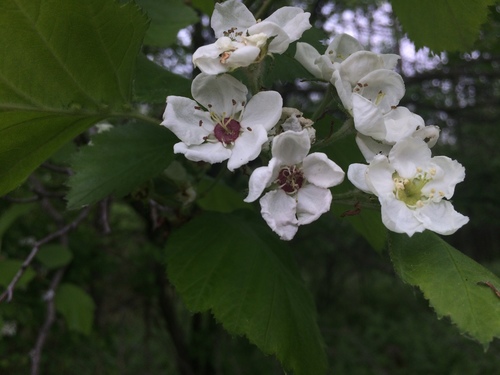
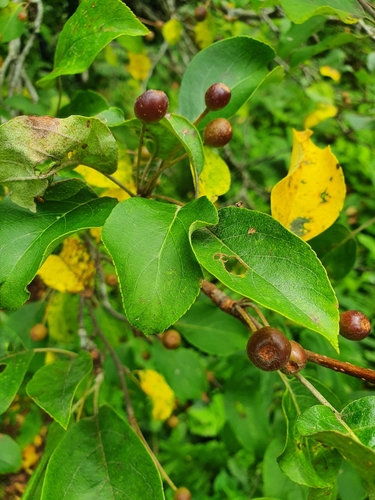
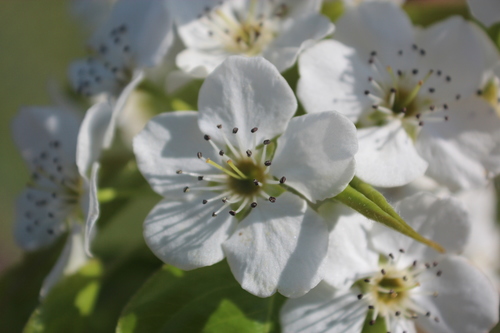
Pyrus ussuriensis Maxim., commonly called the Ussurian pear, Harbin pear, and Manchurian pear, is a flowering plant species belonging to the Rosaceae family. It is native to Korea, Japan, China, and the Ussuri River region of far eastern Russia. This tree species blooms in spring: its buds are slightly pink when they first form, and open into white flowers. Its dark brown buds grow in an alternating arrangement along branches. Mature trees reach approximately 15 meters (49 feet) in height, and prefer growing in well-drained loam soils. Pyrus ussuriensis is considered the hardiest species among all pears. However, when grown in milder climates, trees that have already begun budding are often killed by subsequent freezes. Many species of birds and mammals eat the fruit of this tree. Deer, mice, and rabbits are known to cause damage to Pyrus ussuriensis trees. The leaves are dark green through spring and summer, and turn dark red and gold in the autumn. Products made from this species’ fruits may be more effective at killing ticks and mites than standard commercial insecticides. The fruits are not among the most flavorful pears for human consumption, but their flavor improves after exposure to freezing, and their juice also has a better taste after freezing. When this species is crossed with other pear varieties, it produces flavorful pears that can grow in climates too cold to support most other pear types. Known cultivars include 'Reli', 'Jinxiang', 'Hongbalixiang', 'Baibalixiang', 'Fuwuxiang', 'Qiuxiang', 'Fuanjianba', 'Longxiang', 'Guanhongxiao', 'Shanli24', 'Wuxiangli', 'Shatangli', 'Manyuanxiang', 'McDermand', and Prairie Gem® Flowering Pear (cultivar ‘MorDak’). At least 108 compounds have been identified in the fruits of this species that impact plant breeding work; analysis of these compounds shows that P. ussuriensis cultivars can be divided into four distinct groups.