About Pyrus salicifolia Pall.
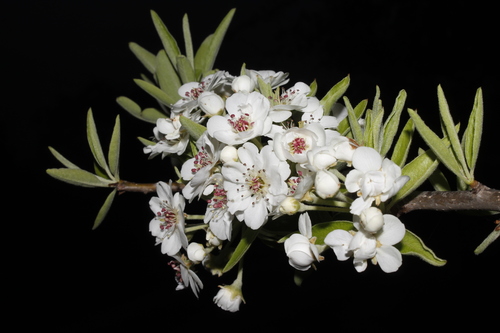
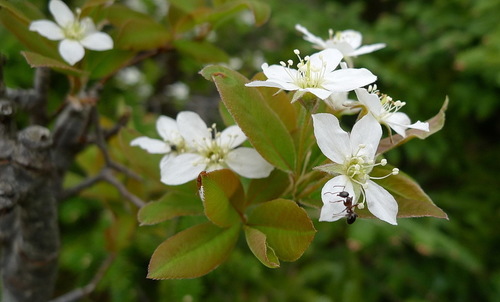
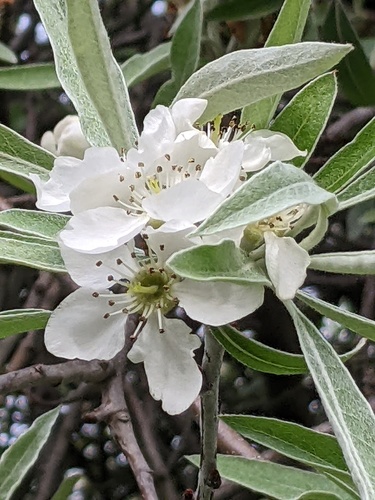
Pyrus salicifolia Pall. is a species of pear native to the Middle East. It is widely cultivated as an ornamental tree, and is almost always grown as a pendulous, or weeping, cultivar. It goes by several common names, including willow-leaved pear and weeping pear. This is a small deciduous tree that rarely reaches 10 to 12 meters in height. It has a rounded crown, and produces pendulous, silvery foliage that looks superficially similar to the foliage of a weeping willow. Its flowers are large, pure white, and marked with black-tipped stamens, while the flower buds have red tips. The small green fruits it produces are hard, astringent, and inedible. It is widely planted in gardens and designed landscapes. Thanks to its spreading root system, it grows well in infertile sandy soils. The tree flowers in spring, and can be trimmed and shaped like topiary for the remainder of the year. This species is very susceptible to fireblight, a bacterial disease. Pyrus salicifolia may be confused with two other pear species: Pyrus nivalis, which is generally taller and rarely has a pendulous growth habit, and Pyrus elaeagnifolia, which has broader entire leaves and longer petioles. The cultivar 'Pendula' has received the Royal Horticultural Society's Award of Garden Merit.