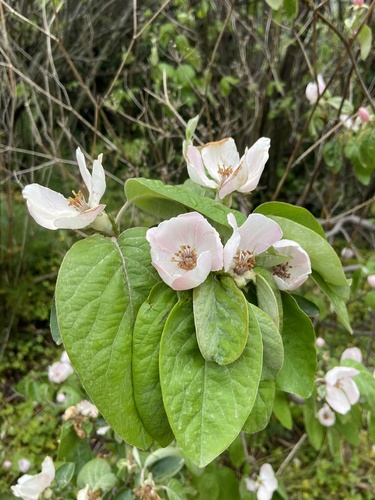
About Pyrus communis L.
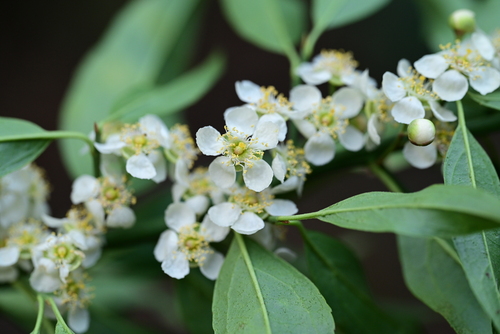
Pyrus communis, commonly known as the common pear, is a pear species native to central and eastern Europe, as well as western Asia. It is one of the most important fruit species grown in temperate regions, and it is the parent species from which most orchard pear cultivars grown in Europe, North America, and Australia are developed. Two other pear species are more widely cultivated in East Asia: the Nashi pear (Pyrus pyrifolia) and the hybrid Chinese white pear, also called ya pear (Pyrus × bretschneideri).
Common pear trees are slightly less cold-hardy than apple trees, but are close in hardiness. They require a period of winter chilling to produce fruit. Caterpillars of multiple Lepidoptera species feed on the leaves of pear trees.
To produce the best, most consistent fruit quality, common pears are harvested when the fruit reaches maturity, but before it fully ripens. If pears are left to ripen on the tree, they often drop before harvest, and will almost always be difficult to pick without bruising the fruit. Mature but unripe pears store and ship well when kept cold, and can be ripened after harvest in a process called bletting. Some cultivars, such as Beurre d'Anjou, will only ripen after exposure to cold temperatures. Fermented pear juice is known as perry. In Britain, place names containing "Perry" often indicate that pear trees grew in that area historically.
Relatively few European or Asian pear cultivars are grown widely across the world. Around only 20 to 25 European cultivars and 10 to 20 Asian cultivars make up almost all commercially produced pears globally. Almost all European pear cultivars originated as chance seedlings or selections from western Europe, most often from France. All Asian pear cultivars originated in Japan and China. 'Bartlett', also called Williams, is the most common pear cultivar worldwide, and accounts for approximately 75% of pear production in the United States.