About Pyrus bourgaeana Decne.
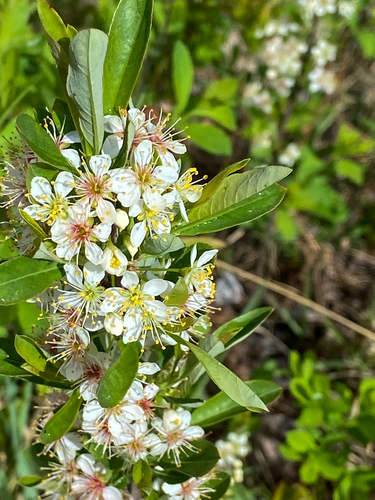
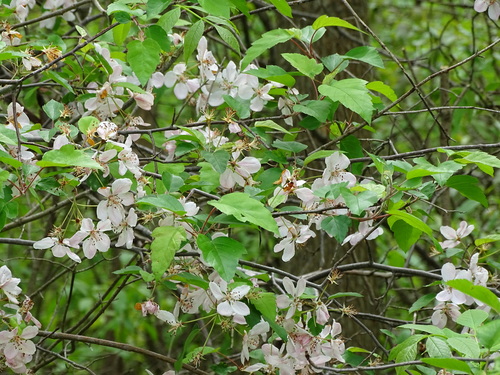
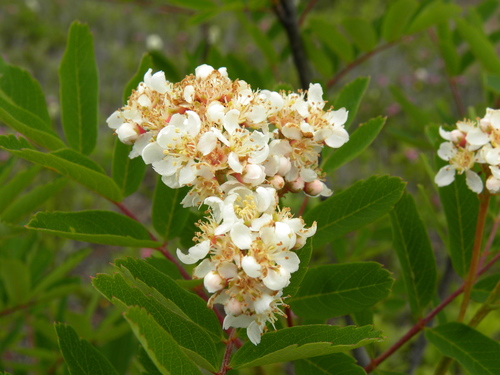
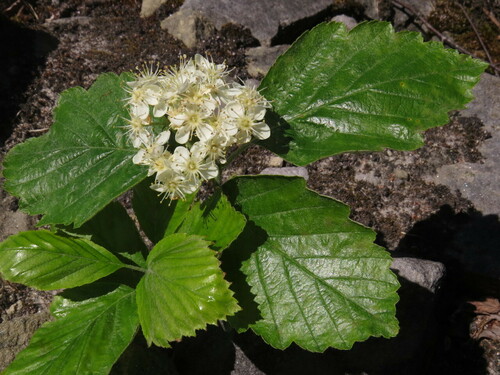
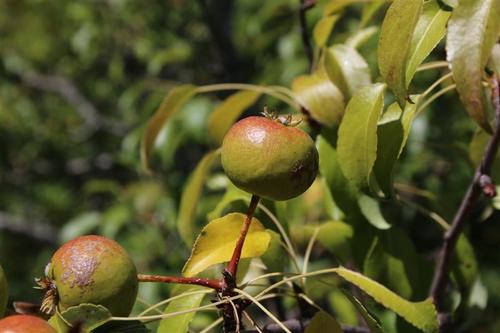
Pyrus bourgaeana Decne., commonly called the Iberian pear, produces hermaphrodite flowers that are white, rarely tinted pink. The flowers measure 2–3 cm in diameter and each has five petals. Its fruits are non-dehiscent, globose pomes that weigh approximately 9.5 g on average. These fruits have green or brown skin that is inconspicuous to birds, many copious lenticels that allow scent to escape, and pulp that is high in fiber. Each fruit usually contains 2 to 4 fully developed seeds. Pyrus bourgaeana is distributed within the Iberian Peninsula, where its range is very fragmented. Trees grow at low densities in small, isolated patches of Mediterranean scrubland, separated from one another by human settlements, agricultural fields, and other developed areas. Within these patches, mature trees typically form small aggregated clusters of 8 to 10 individuals. Iberian pears are remarkably resistant to diseases and blight; they are more often killed by storms or high winds than by illness. The Iberian pear flowers between February and March. It is pollinated by a wide variety of insects, including bees, flies, and beetles. Each individual tree produces 200 to 450 fruits, which ripen from September to December before falling to the ground. Predispersal seed losses caused by invertebrates, specifically microlepidoptera larvae, are usually low. The seeds of the Iberian pear are most frequently dispersed by mammals. Mammalian carnivores such as European badgers (Meles meles) and red foxes (Vulpes vulpes) often eat entire fallen fruits, and disperse the ingested seeds away from parent trees, with these seeds retaining the capacity to germinate. However, in some areas these dispersal agents have been severely reduced in population due to hunting and other human activities. European rabbits (Oryctolagus cunniculus) and some birds also feed on the fruit, but only eat part of the fruit pulp, leaving uneaten seeds directly under the fruiting trees. Rodents often depredate the uncovered seeds left in these partially eaten fruits. Ungulates such as red deer (Cervus elaphus) and wild boar (Sus scrofa) generally ingest whole fallen fruits, but grind up the ingested seeds, so they act mostly as seed predators. Rodents can also act as post-dispersal predators of Pyrus bourgaeana seeds. Pyrus bourgaeana seeds germinate epigeally either shortly after dispersal, or even while still inside fallen fruits, and do not appear to persist in the soil seed bank. Seedlings emerge from winter to early spring, and extensive mortality occurs among young seedlings due to summer droughts and fungal infection. The strongly clustered spatial pattern of Pyrus bourgaeana populations is thought to result from several non-exclusive processes. First, seed dispersers such as foxes and badgers can be partially responsible for this aggregation by creating the initial spatial template that post-dispersal processes then act on. Second, dispersal limitation sometimes leads to seedling establishment directly beneath mother trees, also producing an aggregated pattern. This is likely because a portion of fruits that fall under adult trees are not taken by mammals, or are partially depulped by rabbits without dispersing their seeds. Some seedlings emerge beneath mother trees every season, and eventually a small number of these seedlings become established adult trees. Third, rhizome sprouting in response to disturbance can result in clustering if different sprouts emerge from a single original individual and eventually produce fruit. In Doñana National Park of Andalusia, Pyrus bourgaeana experiences heavy browsing by red deer (Cervus elaphus), and sprouts of a range of sizes emerge beneath some mature trees. As these shoots grow, they can eventually reach adult size, leading to the formation of tree clusters. Pear wood from all pear species has one of the finest textures among fruit woods. It is prized for making woodwind instruments, and pear veneer is used in fine furniture. In southern Spain, the Iberian pear has been used as rootstock for grafting cultivated pear varieties. Its fruit is not edible for humans. The major threats to the species are urbanization and agricultural development.