About Pyrrhula pyrrhula (Linnaeus, 1758)
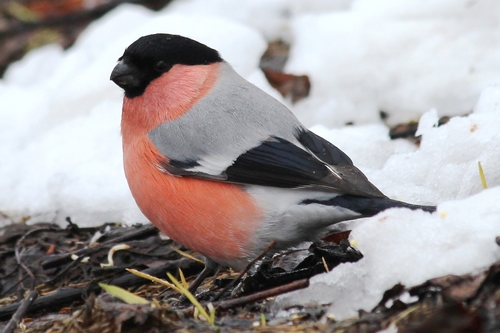
The Eurasian bullfinch, scientifically named Pyrrhula pyrrhula (Linnaeus, 1758), is a bulky, bull-headed bird. Its upperparts are grey; its flight feathers, short thick bill, and the adult's cap and face are all black, while juvenile birds have greyish-brown cap and face markings. In flight, its white rump and white wing bars are highly noticeable. Adult males have a distinctive rich red chest and underparts; females and young birds have grey-buff feathers in these areas instead. This species moults between July and October, and unlike males of many other finch species, male Eurasian bullfinches do not develop the typical duller autumn plumage. This unobtrusive bird has a song made of fluted whistles, often described as mournful. Its usual call is a quiet, low, melancholy whistled peeu or pew. Its song can only be heard at close range: it is a weak, scratchy warbling that alternates with soft whistles. Tamed Eurasian bullfinches can be taught to repeat specific melodies. This bird breeds across Europe and temperate Asia. It is mainly resident, but many northern populations migrate further south for the winter. It favors mixed woodland that includes some conifers for breeding, and also uses parkland and gardens as breeding habitat. Outside of the breeding season, this species does not form large flocks, and individuals are usually seen as a pair or a family group. Its diet consists mainly of seeds and buds from fruit trees, which can make it a pest in orchards. For centuries in England, every parish paid a bounty for every Eurasian bullfinch killed. UK populations of this bird have declined since the 1970s, due to the loss of orchards and woodlands. In autumn and early winter, Eurasian bullfinches favor ash and hawthorn. When wild bird cover is planted for them, they prefer kale, quinoa and millet, located next to tall hedges or woodland. Adult birds feed their chicks on invertebrates.