About Pyrrhosoma nymphula (Sulzer, 1776)
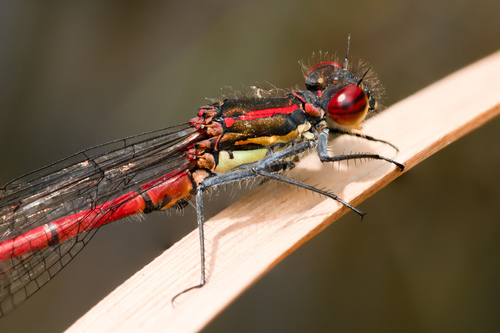
Pyrrhosoma nymphula (Sulzer, 1776) is a species of damselfly that reaches a body length of 33–36 millimetres (1.3–1.4 in). These are large, robust damselflies that have black legs and wing spots in both sexes. Mature males have red eyes and a black thorax; mature specimens display red shoulder stripes, while immature males have yellow stripes. The ante-humeral stripes change to red as the damselfly ages. The abdomen is red with small black rings, and has bronze-black bands towards the apex on segments 7-9. The wings are hyaline, with a blackish pterostigma. Mature females occur in three main colour forms: typical, fulvipes, and melanotum, which range from mostly black to mostly red, all with yellow bands around the abdominal segments. Some intermediate forms also exist. The typica form has more black on its abdominal segments than the fulvipes form, particularly on segment 6. In the melanotum form, the upper surface of the female abdomen is almost entirely black. Immature damselflies of both sexes have lighter eyes and yellow thoracic stripes instead of red. This species can easily be confused with small red damselflies, but small red damselflies have orange legs, while Pyrrhosoma nymphula (often called the large red damselfly) has black legs. A closely related species, the Greek red damsel Pyrrhosoma elisabethae, occurs in Greece and Albania. The two species look very similar: only females have a slight difference in the pronotum, with deep folds in the hind margin of Pyrrhosoma elisabethae. Males differ in their lower appendages: in Pyrrhosoma elisabethae, the lower appendages are longer than the upper ones, and the black hook on the lower appendages is half as long as the hook on the large red damselfly's lower appendages. This species is mainly distributed across Europe, with some populations found in Northern Africa and Western Asia. It inhabits small ponds, lakes, dikes, and occasionally slow-moving rivers, and tends to avoid fast flowing water.