About Pyrrhopyge araxes (Hewitson, 1867)
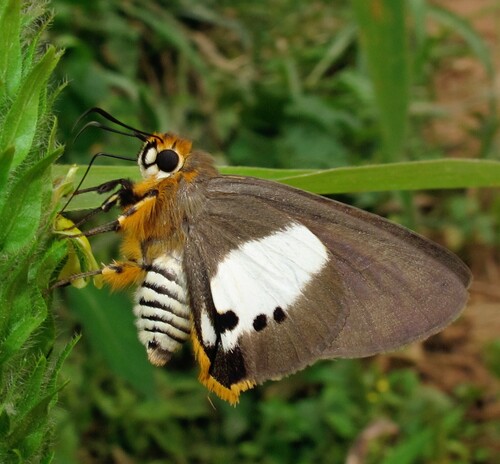
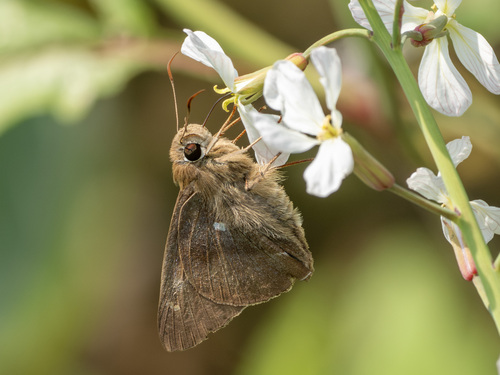
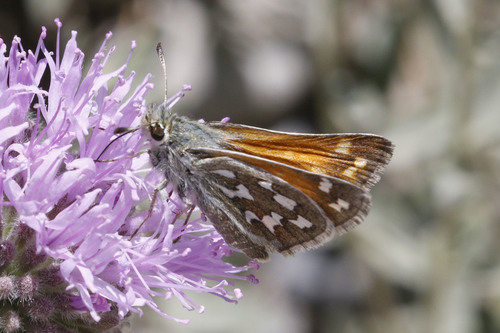
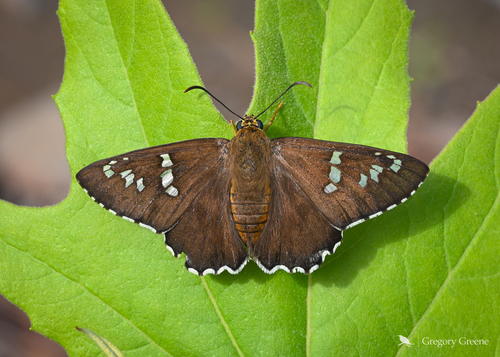
Pyrrhopyge araxes, commonly called the dull firetip, was first described by Hewitson in 1867. On the upper side of its wings, the base color is brown, and the forewings bear several glassy white spots. The underside of the wings is also brown, while the body and the basal area of the wings are bright yellow-orange. Its wingspan ranges from 1 3/4 to 2 1/4 inches, which equals 4.5 to 5.7 centimeters. This species can be found in southwestern oak woodlands, roadsides, streamsides, and forest trails. The larvae of Pyrrhopyge araxes live inside folded-over leaf nests. Fully grown yellow-banded larvae are red-brown and covered in white hairs; their heads are black, with white and orange hairs. The pupa is brownish-red with maroon joints, and has a dull orange abdomen. It is covered in white hairs, with the exception of the wing cases, and has orange hairs on the top of its head. Partially grown larvae construct a small nest on their host plant, where they overwinter. This species produces one brood per year.