About Pyrrhopappus pauciflorus (D.Don) DC.
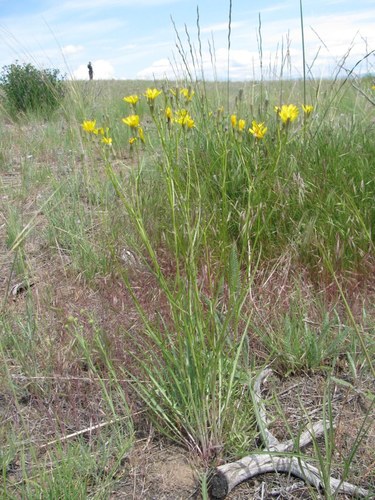
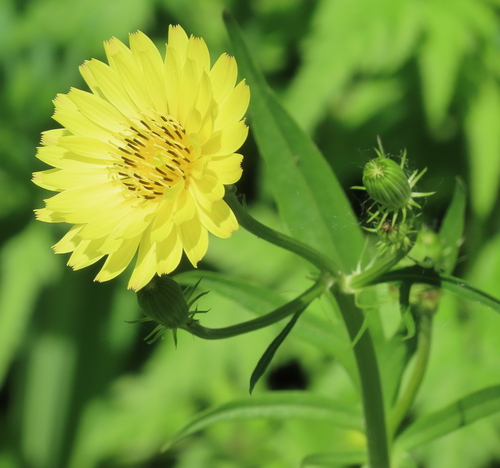
Pyrrhopappus pauciflorus, commonly known as Texas dandelion, is a taprooted plant that reaches 6 to 20 inches (15 to 50 centimeters) in height. Its petals open in the morning and remain open through midday, and the plant typically blooms from March to May. When broken, its stem produces a milky sap, and dried seeds resemble dandelion puffs. Per the U.S. Geological Survey, the upper leaves of this species are pinnatifid, usually with 2 or 3 linear lobes on each side. Lower leaves are usually pinnatifid, and may be only toothed late in the growing season. All cauline leaves are hairless and clasping. P. pauciflorus looks similar to P. carolinianus, but can be distinguished by the trichomes on its stems, a feature P. carolinianus lacks. In its ecology, Texas dandelion acts as a food source for several local species: cattle and white-tailed deer consume its leaves and stems, while Rio Grande turkeys eat its seeds. Like related flowers, it also attracts small pollinators. As a freeze-hardy native wildflower, Texas dandelion can grow in full or partial sun and requires very little water. It prefers well-drained soil, such as sand or clay, and can grow under tree canopies as well as in grasslands. The roots of Texas dandelion can be used to brew dandelion tea or coffee. The leaves are edible but have a bitter taste, so they are often boiled before eating. It is also possible to make jelly from Texas dandelion. According to physical organic chemist and forager Mark "Merriwether" Vorderbruggen, the bitter flavor of Texas dandelion roots is growing in popularity with high-end bartenders, who use these roots to replace traditional bitters in custom drinks.