About Pyrrhalta viburni (Paykull, 1799)
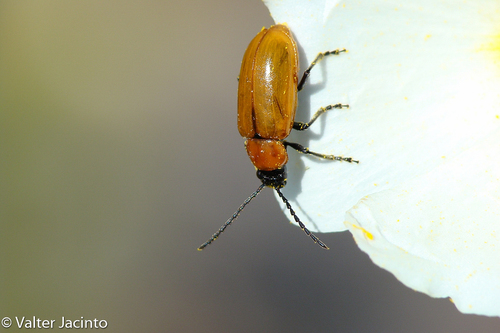
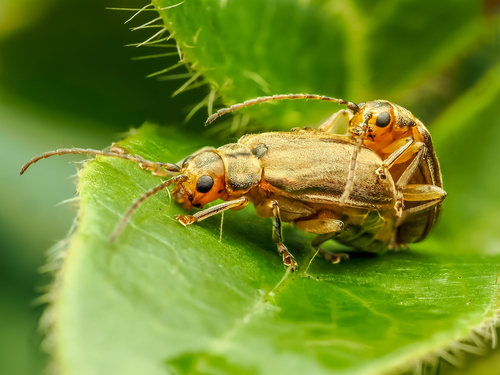
Pyrrhalta viburni, commonly known as the viburnum leaf beetle, has the following physical description and life cycle. Adults range in size from 4.5 to 6.5 mm, while mature larvae measure approximately 10 to 11 mm. This species has a brown head, thorax, and elytra, with dense golden-grey hair covering its dorsal surface. Viburnum leaf beetles produce one new generation per year. Females lay eggs starting in summer and continuing into October. To lay eggs, females burrow into the underside of viburnum terminal twigs and create cavities within the twig's pith tissue. They then lay eggs in clusters of 5 to 6, and cover the clusters with frass. Eggs overwinter inside these protected cavities, which shield them from water loss and predation. Females prefer to lay their eggs near sites where other females laid eggs in previous years. Eggs hatch by mid-May. After hatching, larvae feed and grow through three successive instar stages. Once they finish growing, they pupate in the soil, and emerge as adult beetles in late June or early July.