About Pyrgus onopordi (Rambur, 1839)
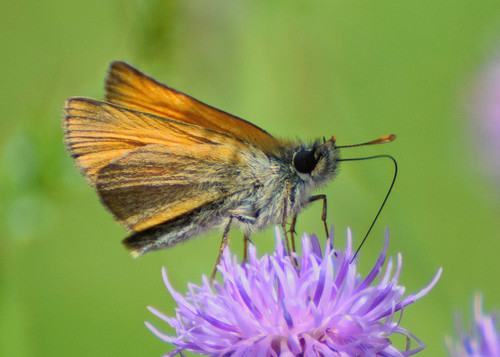
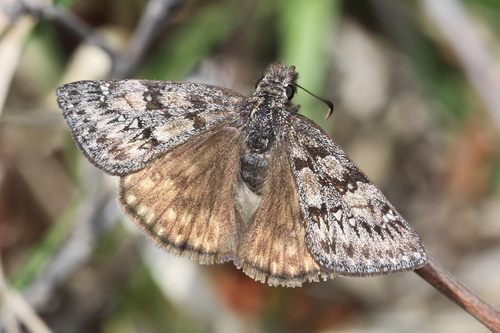
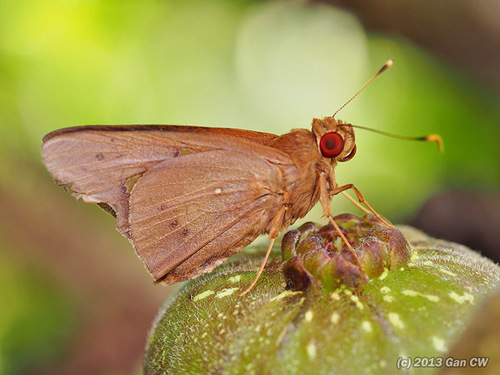
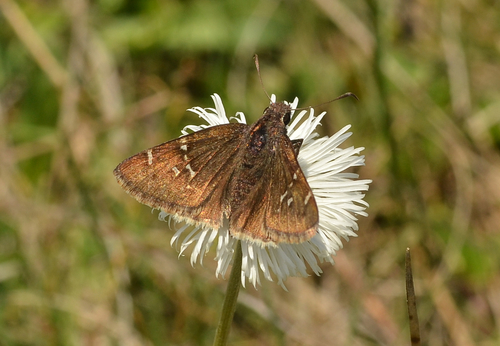
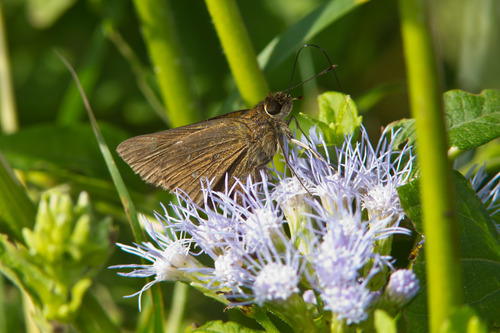
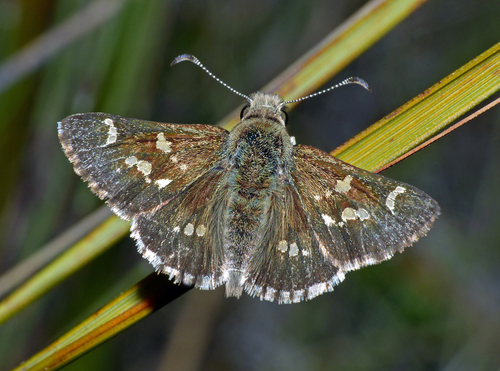
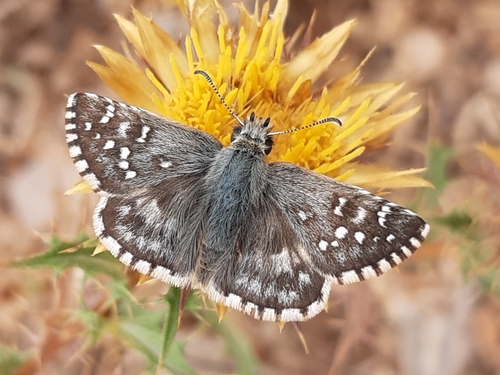
Pyrgus onopordi (Rambur, 1839) has a wingspan ranging from 22 to 28 mm. The upper sides of both its forewings and hindwings are dark brown or khaki with a slight yellowish tinge, white markings, and a white fringe along the edge. The underside of the hindwings is light yellow-brown, marbled with several large white spots. Among these spots is a characteristic anvil-shaped discal mark bordered with dark lines, located in the fourth and fifth cells. Females of this species are darker and usually larger than males. Unlike most European Pyrgus species, this skipper can typically be easily identified in the field because it is noticeably paler than other species in the same genus. This paler appearance comes from a heavy dusting of yellowish scales that overlay the dark brown base wing color. The eggs of Pyrgus onopordi are yellowish, rounded, and flattened at both ends, with up to twenty strong longitudinal ribs on their surface. Caterpillars range in color from light to dark brown, with bright lateral line markings, and have black heads. Pupae are bluish-tinted and have a very contrasting pattern. This species is quite similar in appearance to Pyrgus carlinae, Pyrgus cirsii, Pyrgus cinarae, Pyrgus malvae, Pyrgus alveus, Pyrgus andromedae, Pyrgus cacaliae, and Spialia sertorius. Pyrgus onopordi occurs in central and southern Europe, including Austria, Croatia, France, Germany, Italy, Portugal, Slovenia, Spain, Switzerland, and the Netherlands, and also in North Africa, in Algeria and Morocco. These butterflies live in flowery meadows, hot dry grassy meadows, and areas alongside streams, at elevations between 0 and 2,000 metres (0 to 6,562 ft) above sea level.