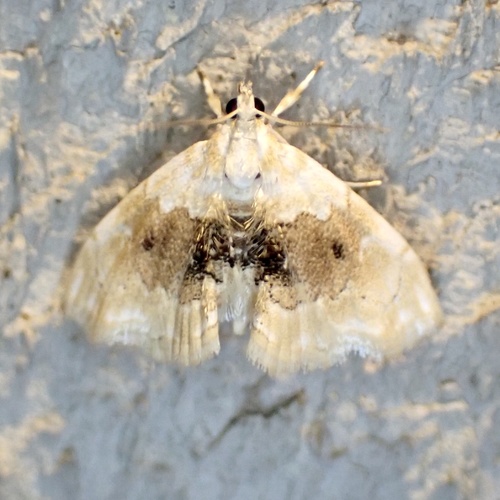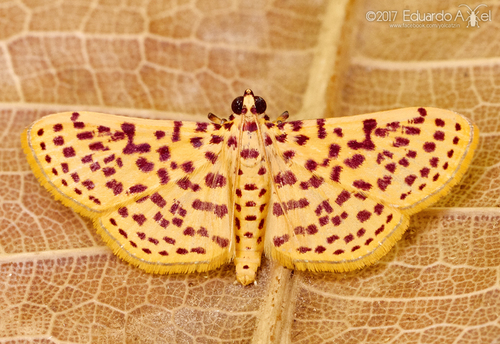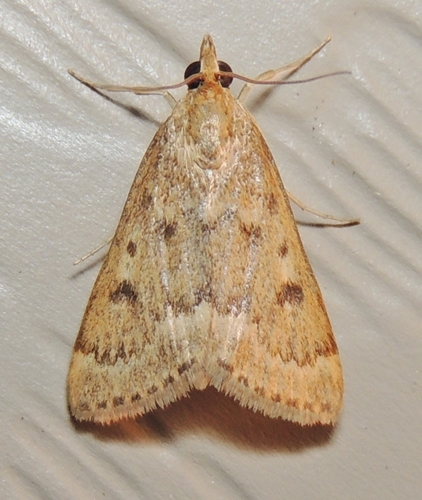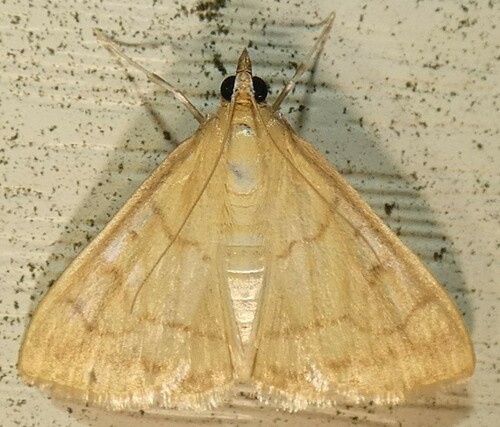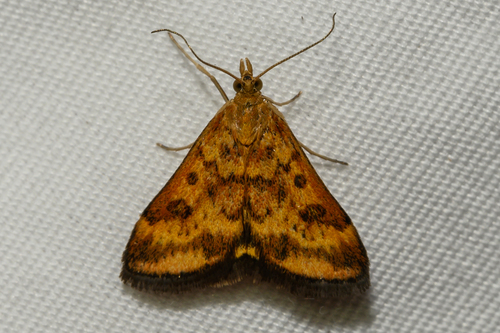
Pyrausta subsequalis Guenée, 1854 is a animal in the Crambidae family, order Lepidoptera, kingdom Animalia. Not known to be toxic.

Photo of Pyrausta subsequalis Guenée, 1854 (Pyrausta subsequalis Guenée, 1854)
🦋 Animalia

Pyrausta subsequalis Guenée, 1854

Pyrausta subsequalis Guenée, 1854

Pyrausta subsequalis, the weedfield sable, is a Crambidae moth found across much of North America.

Family
Genus
Pyrausta
Order
Lepidoptera
Class
Insecta

About Pyrausta subsequalis Guenée, 1854

Pyrausta subsequalis, commonly called the weedfield sable, is a moth species belonging to the family Crambidae. It was first described by Achille Guenée in 1854, and its full scientific name is Pyrausta subsequalis Guenée, 1854. This moth is found across much of North America, with recorded ranges extending from southern Alberta and southern British Columbia in the north, south to Arizona and New Mexico, east to Florida, and north again to Ontario. It inhabits dry prairie habitat areas. The wingspan of adult individuals measures 14 to 18 mm. Adults are typically active on the wing from July through early September, but in coastal California, they can be observed year-round.
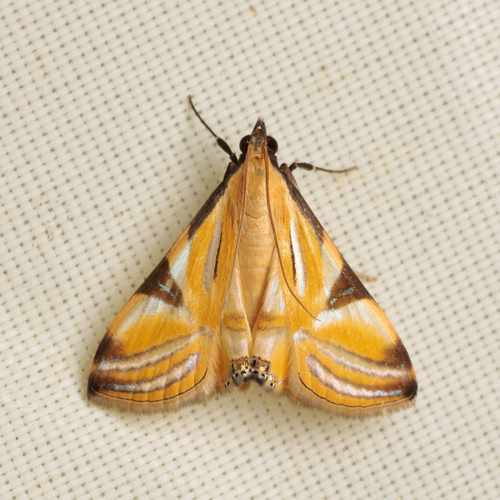
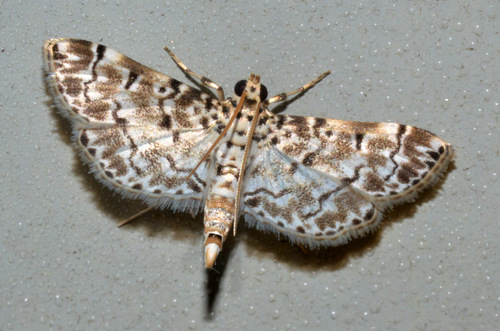
Photo: (c) Stephen John Davies, some rights reserved (CC BY-NC), uploaded by Stephen John Davies · cc-by-nc

Taxonomy

Animalia Arthropoda Insecta Lepidoptera Crambidae Pyrausta

More from Crambidae

Sources: GBIF, iNaturalist, Wikipedia, NCBI Taxonomy · Disclaimer

Identify Pyrausta subsequalis Guenée, 1854 instantly — even offline

iNature uses on-device AI to identify plants, animals, fungi and more. No internet needed.

Download iNature — Free

Start Exploring Nature Today

Download iNature for free. 10 identifications on us. No account needed. No credit card required.

Download Free on App Store