About Purshia stansburiana (Torr.) Henrickson
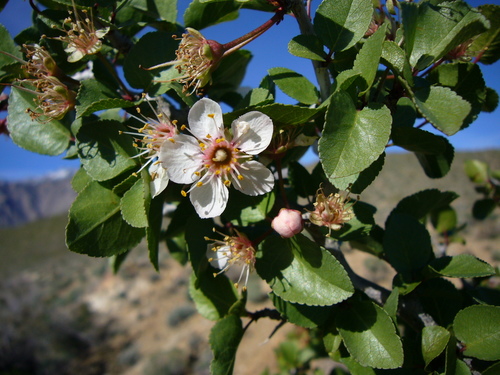
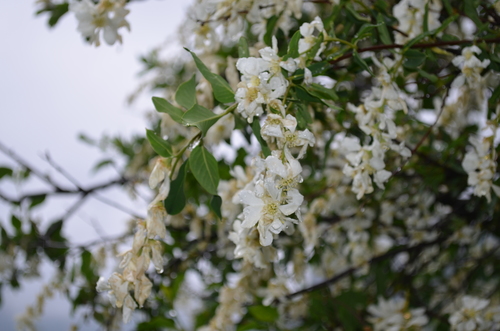
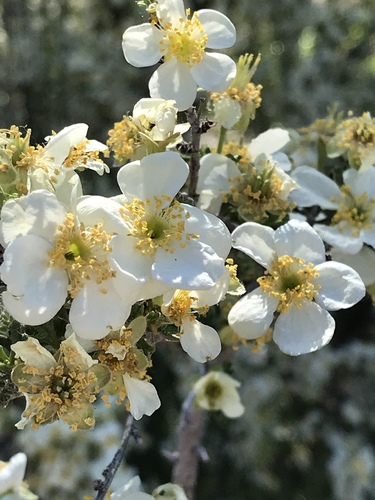
Purshia stansburiana, commonly called Stansbury's cliffrose, is typically a shrub that usually reaches 1 to 3 meters tall. In exceptional cases it can grow much larger, approaching 4 meters, and occasionally reaching up to 8 meters, taking on a somewhat treelike form. This species hybridizes easily with other members of the Purshia genus. It has shreddy bark covering its branches. Its small leaves are very thick, glandular, and divided into multiple lobes, which may split further into sub-lobes; the upper surface of the leaves is dotted with tiny punctations. The shrub produces abundant blooms of white or cream-colored flowers with clawed petals. The flowers have a strong, sweet fragrance, and blooming occurs from spring through to the first frost. Its fruit is an achene formed into a long plumelike structure that can grow up to 6 centimeters long. The plume structure aids dispersal: the fruit is carried by wind, and also moved by animals such as rodents. This species is drought-tolerant, and its seedlings often survive better during years with below average precipitation. Stansbury's cliffrose provides valuable forage browse for many wild ungulates, including elk, mule deer, and desert bighorn sheep, as well as for domestic livestock. Many species of birds and rodents eat its seeds; rodents often cache the seeds underground, where cached seeds may later sprout. The plant is used for revegetation projects to restore degraded habitat within its native range, and it is also grown as an ornamental plant. Native American groups traditionally used the plant for multiple purposes: they processed its bark into fiber to make clothing, bedding, and rope, and used its branches to craft arrows.