About Pulsatilla halleri (All.) Willd.
Taxonomy and Nomenclature
Pulsatilla halleri, synonym Anemone halleri, common name Haller's anemone, is a species of flowering plant in the buttercup family Ranunculaceae.
Geographical Distribution
It can be found in sub-alpine and alpine regions starting from southern France, southern Switzerland, northern Italy and Poland, extending east to Greece, Bulgaria and Ukraine.
Native Habitats
Its native habitats include mountain meadows, dry hills, dry grassy locations and mountainous forest glades.
Cultivation Status
It is collected and cultivated for use in botanical and private gardens.
Size and Growth Form
This herbaceous perennial grows in clumps reaching 20 cm, or 7.9 inches, tall and wide.
Foliage and Reproductive Features
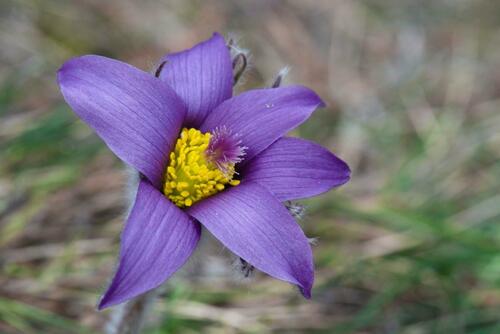
It has hairy grey-green foliage, and in spring it produces pink or purple flowers that later form ornamental silky seedheads.
Cultivation Requirements
It prefers an exposed, well-drained position in full sun.
Toxicity
Anemone halleri is mildly toxic, and can cause stomach ache after skin contact.
Horticultural Awards
Both the full species and the subspecies P. halleri subsp. slavica have received the Royal Horticultural Society's Award of Garden Merit.