About Pulicaria dysenterica (L.) Bernh.
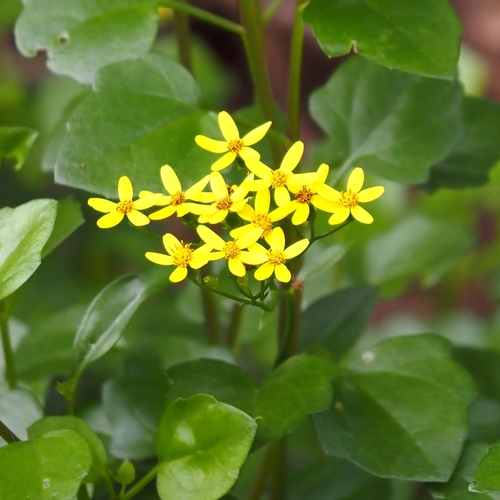
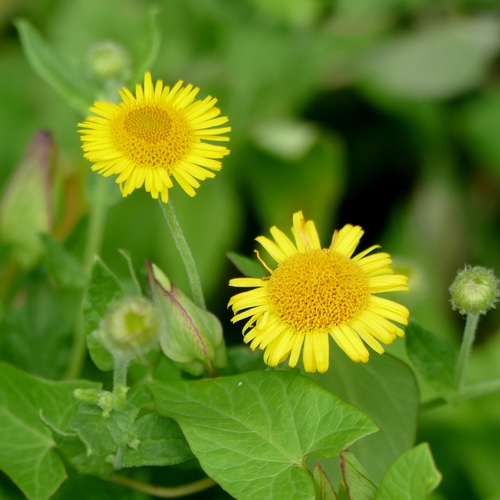
Pulicaria dysenterica (L.) Bernh., commonly called common fleabane, or meadow false fleabane in North America, is a species of fleabane that belongs to the Asteraceae family. It is native to Europe and western Asia, and it grows in a wide range of habitats, from semi-arid Mediterranean woodlands to wetter locations. This plant is a perennial, and can form dense clusters of growth by spreading via its roots. It produces flowers when it reaches its maximum height of approximately 60 centimetres, or 2.0 feet. Its leaves are arranged alternately along the stem, and they clasp the stem; the stem itself contains a salty-astringent liquid. Its yellow inflorescences are typically made up of a prominent central cluster of 40–100 disc florets, surrounded by 20–30 narrow, pistillate ray florets. As the plant sets seed, the flower heads bend backward. Common fleabane is the main food plant for the fleabane tortoise beetle, Cassida murraea, as well as for four micromoth species: Apodia bifractella, Ptocheuusa paupella, Oidaematophorus lithodactyla (dusky plume), and Digitivalva pulicariae. The common name "fleabane" comes from the plant's former use as incense to drive away insects. Other historical uses of the plant include treatments for dysentery and unspecified eye ailments.