About Pulchrocladia ferdinandii (Müll.Arg.) S.Stenroos, Pino-Bodas & Ahti
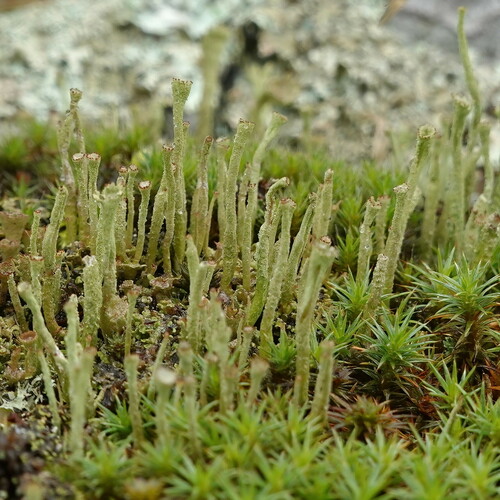
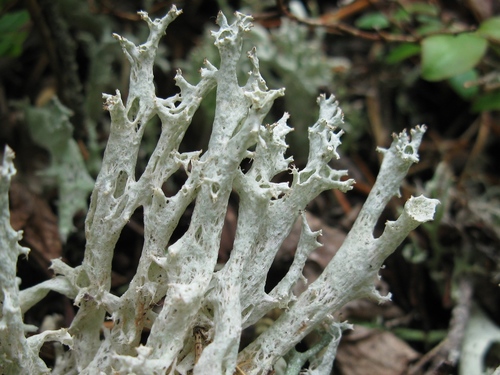
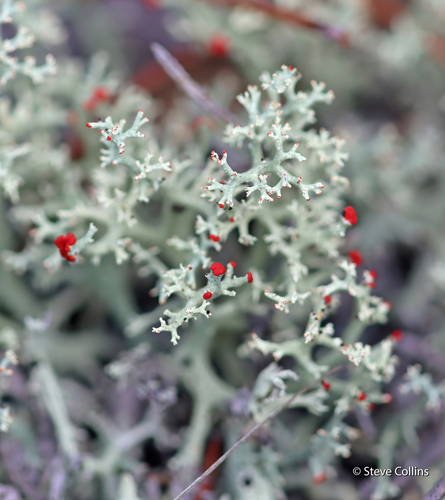
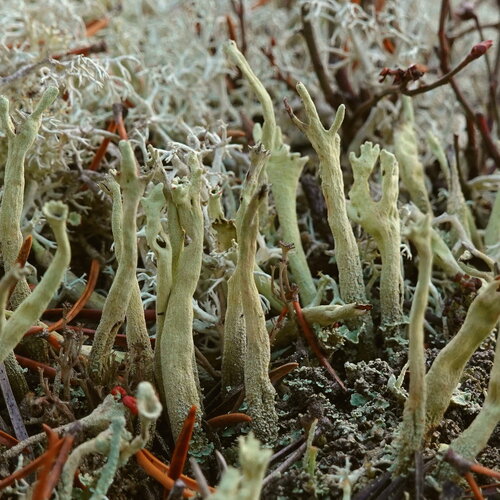
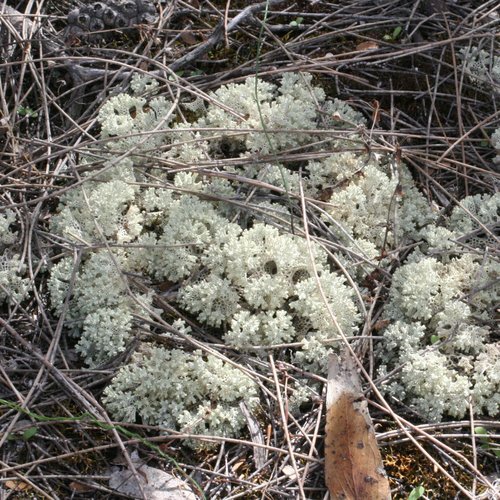
Pulchrocladia ferdinandii is a species of lichen that belongs to the family Cladoniaceae. It was first formally described under the name Cladonia ferdinandii in 1882 by Swiss lichenologist Johannes Müller Argoviensis. Its specific epithet honors Ferdinand von Mueller, a German-Australian botanist who collected the species' type specimen near Esperance, Western Australia. Rex Filson moved this species to the genus Cladia in 1970, and in 2018, it was transferred to the newly created genus Pulchrocladia. This lichen produces creamy-white to yellow pseudopodetia that can grow up to 15 centimeters (6 inches) tall. Secondary compounds found in this lichen are atranorin, ursolic acid, and usnic acid. Pulchrocladia ferdinandii is distributed across Australia, and has been recorded from the Australian Capital Territory, New South Wales, Queensland, South Australia, and Western Australia.