About Puccinia sessilis J.Schröt.
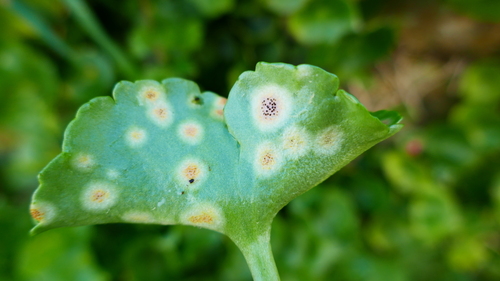
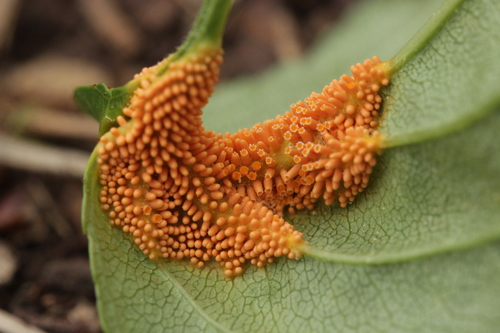
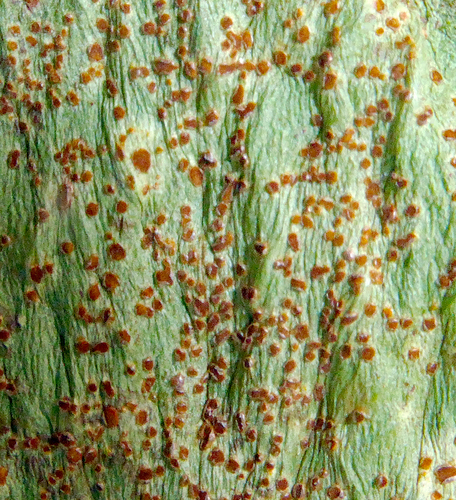
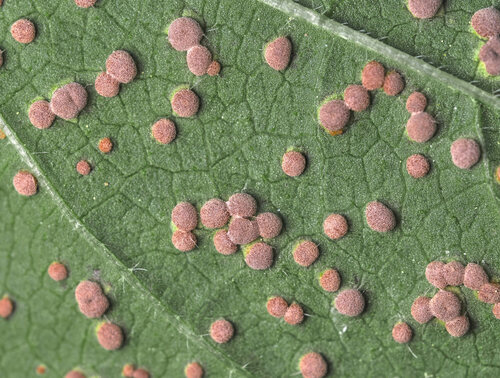
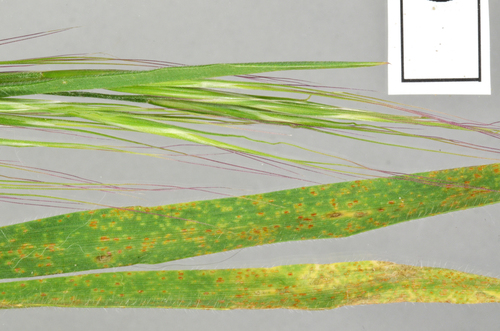
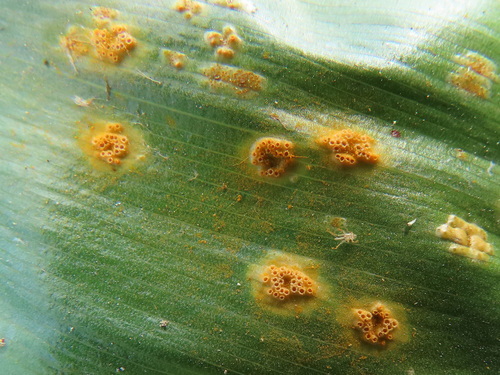
Puccinia sessilis J.Schröt. is a species of fungus and plant pathogen, commonly known by the common names arum rust or ramsons rust. It commonly infects two plant species: Arum maculatum and Allium ursinum. Infection causes yellow to orange circular patches to form on leaves. On the underside of infected leaves, the fungus produces raised orange aecia, which are typically covered in spores. This species is common in Eurasia during the spring. It was originally discovered growing on the leaves of Iris versicolor in New York, USA. In addition to its common host species, this rust fungus also affects a range of other plant species: Convallaria majalis, Dactylorhiza fuchsii, Dactylorhiza incarnata, Dactylorhiza majalis, Gymnadenia conopsea, Neottia ovata, Paris quadrifolia and Phalaris arundinacea. A specialised form, Puccinia sessilis f.sp. narcissi-orchidacearum Boerema & Kesteren, is now reclassified as Aecidium narcissi. This form causes rust disease in daffodils (Narcissus) and also infects various wild Orchidaceae species.