About Puccinia poarum Nielsen
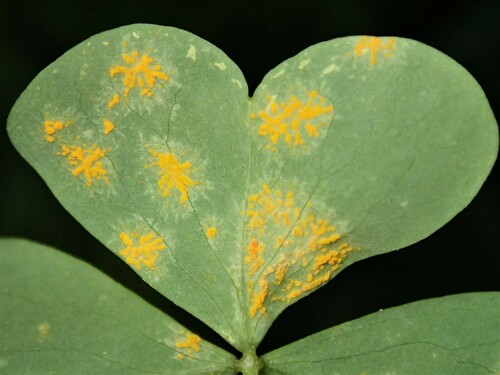
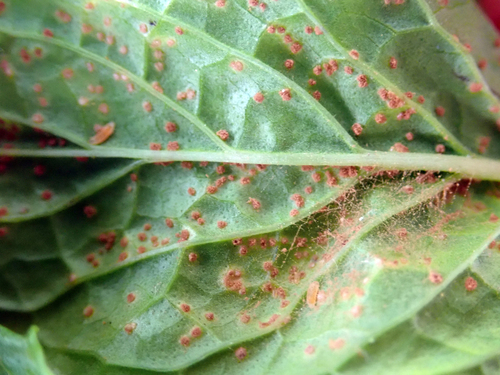
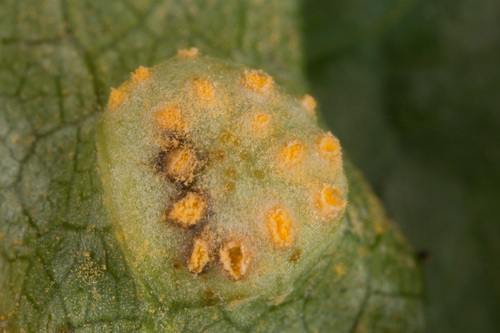
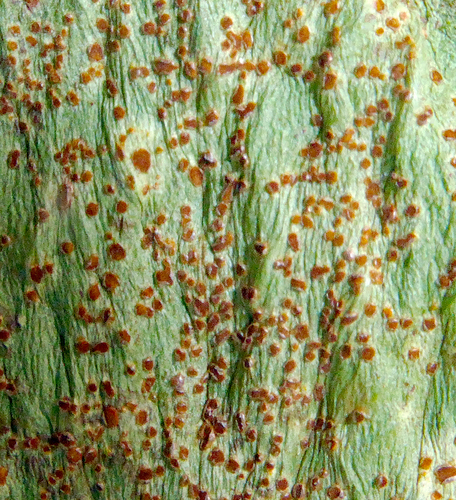
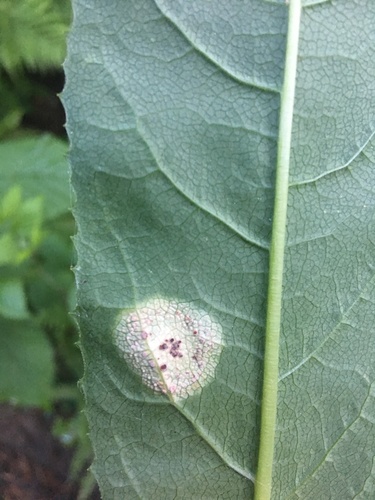
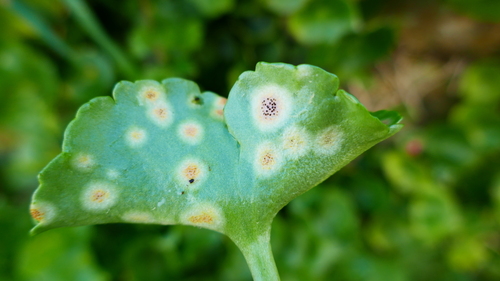
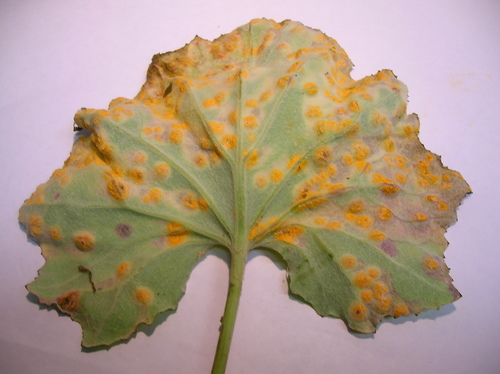
Puccinia poarum Nielsen is a rust fungus with distinct characteristics depending on its host. When it infects Tussilago farfara (coltsfoot), it produces large, circular, yellow or orange-red protruding spots on the undersides of leaves. These spots often have a purple margin and sometimes develop a central hole. Each gall on the lower leaf surface holds 20 to 30 cup-shaped aecia of the fungus. On the upper leaf surface, infection causes a yellow circular marking with no swelling, and spermogonia may also be present here. On Tussilago farfara, P. poarum is necrotrophic, meaning it obtains nutrients from dead plant cells and tissues. Puccinia poarum can be misidentified as Coleosporium tussilaginis, another rust that grows on Tussilago farfara. Coleosporium tussilaginis usually appears later in the growing season, does not form galls or aecia, and instead produces diffuse uredinia bearing powdery orange spores on the lower leaf surface. It is less noticeable on the upper leaf surface, and lacks the purple margin and central hole that are characteristic of P. poarum. In the United Kingdom, this rust is locally common and widely distributed. Its overall range extends from the Northern hemisphere to South America. Puccinia poarum has a heteroecious life cycle that requires two different host plants to complete. It forms spermagonia and aecia on Tussilago farfara (coltsfoot), and forms uredinia and telia on the leaves of grasses in the family Poaceae. Its life cycle is similar to that of Puccinia striiformis. Peter Nielsen was the first person to describe the heteroecious life cycle of this fungus.