About Pterostichus melanarius (Illiger, 1798)
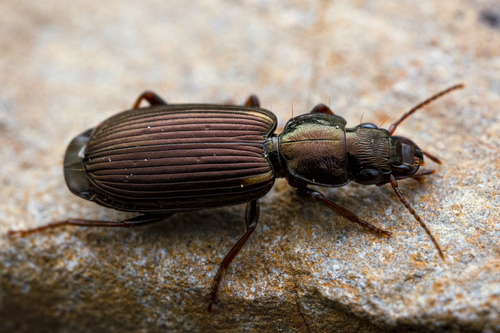
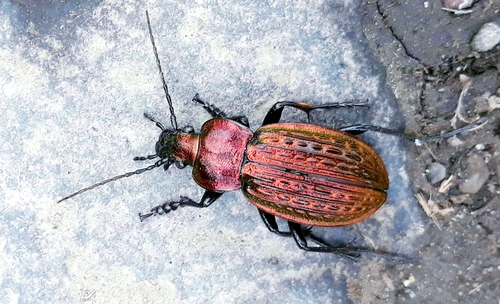
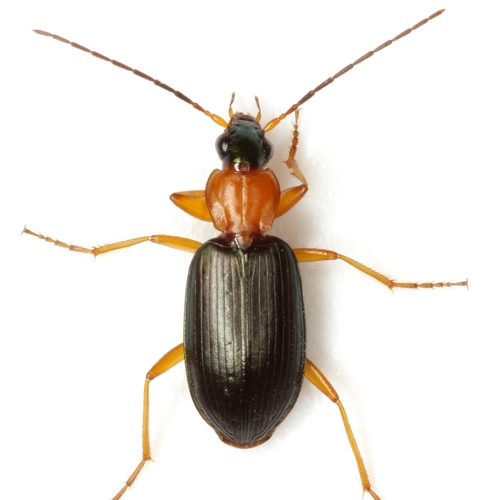
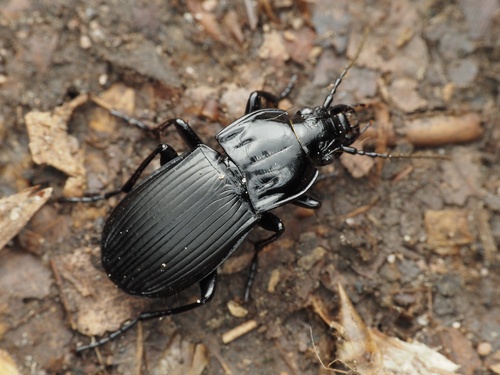
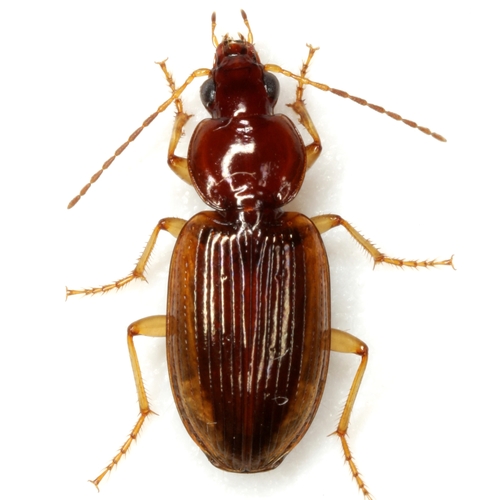
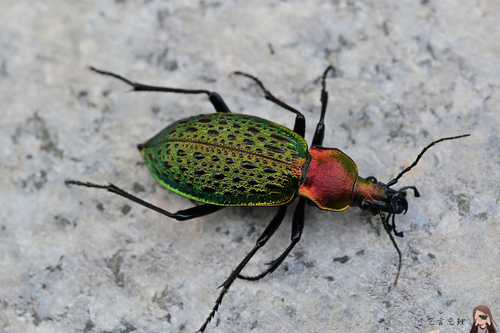
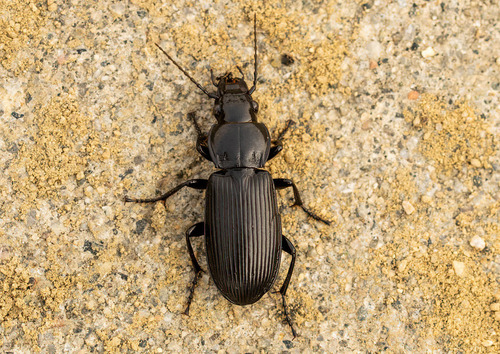
Description: Adult Pterostichus melanarius reach 12–18 mm in body length. They are black in color, with straight striations on their elytra. They can be distinguished from other Pterostichus species by their laterobasal carina and denticulate posterior angles of the pronotum. Adults exhibit wing dimorphism, meaning populations include both brachypterous and macropterous individuals. Brachypterous beetles have shortened hind wings and cannot fly. Macropterous beetles have fully developed hind wings and are capable of flight. Eggs are translucent white right after being laid, but darken before hatching. Larvae have a hard, dark reddish-brown head. The appearance of pupae has not been well documented. Distribution: P. melanarius has a broad geographical range across Europe, the United States, and Canada. It can live in natural, anthropogenic, and agricultural biotopes. Beetles in similar geographical regions tend to share similar development and life cycle stages, which differ from those of beetles in other regions. P. melanarius can move 2.5 to 5 meters per day; this daily distance increases during summer when the beetles search for mates. In addition to walking, the flight capacity from wing dimorphism helps this beetle travel across wide areas. In Europe, the species is found in Scandinavia, Italy, Greece, Ireland, Russia, and Serbia. In North America, it occurs on both the west and east coasts of the continent, and has been recorded steadily expanding into the central United States. Studying this shifting distribution is important to understand how P. melanarius may impact its new habitats. Habitat: P. melanarius is hydrophilic and eurythermic, meaning it tolerates wet environments and a wide range of temperatures. It can live in habitats including forests, meadows, urban areas, and arable land. Researchers note that this habitat variability leads to variation in total individual development duration even within a single natural climatic zone, which can produce different life cycle variants in local populations that occupy different biotopes. In other words, the beetle can adapt its life cycle stages to align with its varied habitats. The key conditions required for the beetle to colonize and thrive in a habitat are temperatures suitable for larval development, and access to available food resources. Because the species' reproduction and development depend on temperature, climate change poses a challenge to beetle fecundity. A 2021 study modeled the expected future distribution of P. melanarius using several different RCP climate scenarios. The study confirmed that the most important factors driving changes in the beetle's distribution are mean temperature during the warmest and coldest times of year, as well as precipitation levels during the driest periods of the year. Under the RCP 8.5 scenario, the worst-case climate change scenario, a sharp reduction in P. melanarius populations in Southern Europe and the Mediterranean is predicted by 2070. Less dramatic distribution changes were predicted for more moderate RCP scenarios. Life cycle: Mating of P. melanarius takes place in early fall, and oviposition follows shortly after. To maximize the chance that larvae survive and have access to resources without needing to travel far, female beetles choose shaded, wet environments to lay their eggs. Females typically lay around 130 eggs per clutch. All larval stages develop within soil. Colder temperatures are required for larvae to develop toward adulthood, while warmer temperatures are required for the transition from the final larval stage to the pupal stage. Following this developmental schedule, fully developed adults emerge between late May and June.