About Pterocarpus erinaceus Poir.
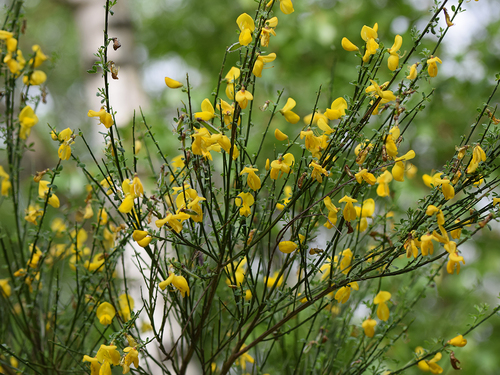
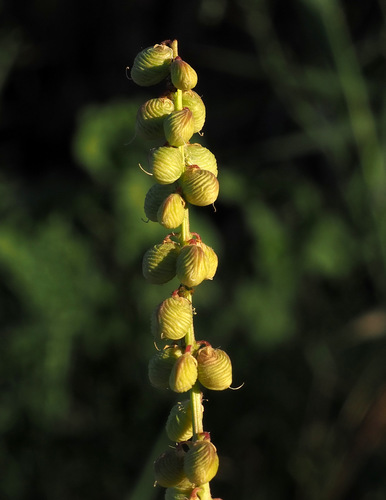
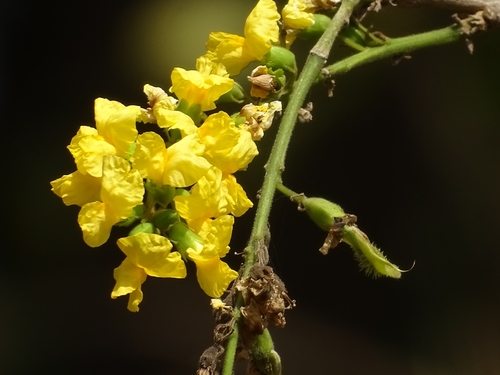
Pterocarpus erinaceus Poir. is an endangered tree species native to the Sahelian region of West Africa. It is listed in Appendix II of the Convention on International Trade in Endangered Species of Wild Fauna and Flora. It has a wide range of uses: it provides fuel wood and woodworking material, it is used for medicinal purposes, and as a nitrogen-fixing plant, it improves nutrient-depleted farming land. This tree has multiple common names: kosso, barwood, African kino tree, muninga, and vène. The name mukwa refers to this species as well as other Pterocarpus plants. Additional local names include bani in Fulfulde, tolo in Djerma, wén in Wolof, and ban in Serer. Wild groves of this tree occur on the savannahs of West Africa, but the species is growing increasingly rare, and it is sometimes cultivated. It also grows in forests of Comoé National Park in Côte d'Ivoire; this region is geographically close to the Sahel, but has a higher moisture content because it sits between two large rivers. Pterocarpus erinaceus also grows in abundance in Kurmi Local Government of Taraba State in Nigeria. On average, the tree reaches around 11 meters in height. It has dark, scaly bark, yellow flowers, and produces winged pod fruits. It grows best on sunny, hot African plains that have long dry seasons and frequent fires. Its wood ranges in color from yellowish to rosy red and rich brown, and it is highly valued for woodworking. It also makes high-quality charcoal and fuel wood. The tree exudes a red sap called kino, which is used as a dye in tanning and cloth-making. As a legume, this species hosts rhizobia that add nitrogen back into the soil, increasing soil fertility, so it is a desirable plant for farmland. Its foliage is also a nutritious fodder for farm animals. Mali has an active market for Pterocarpus erinaceus foliage, which is in high demand as fodder by sheep farmers. Medicinal uses for the tree include reducing fever and suppressing cough. Pterocarpus erinaceus is a traditional wood used to make djembe drums. It is the only wood used to make the keys and part of the frame of the balafon, and it is the most common wood used to make the neck of the kora. This species was brought to Europe in the 19th century by Scottish explorer Mungo Park. Currently, Pterocarpus erinaceus is threatened by overexploitation, environmental degradation, and climate change. However, the tree is somewhat prolific and easy to cultivate, so reforestation efforts have had some success.